Blog
-

Rasmus Bergheim 1932-2017
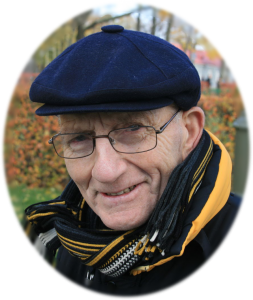
Rasmus Bergheim Folk går bort heile tida men det å misse ein far er ei bru ein kryssar berre ein gong i eitt menneskeliv. Sjølv om det gjev oss sorg at han er borte, er det samstundes også ei lette at han no har funne varig fred etter eitt halvår då tilværet var tungt for han.
Når det er sagt var ikkje papsen ein som vigde mykje av livet til svartsyn — men ein som fyrst og fremst sette det lette ordet høgt. Eg må såleis få be om orsaking om eg trakkar over når eg freistar meg på eit minneord i hans ånd.
Papsen var godt vaksen før han stifta eigen familie. Det er mykje av det som skjedde i ungdomsåra hans som eg ikkje kjenner til. Det er likevel tre ting frå dei tidlege tidene han jamleg tok fram og som skil seg ut i minneflaumen.
Den fyrste er at kvar gong eg spurde kva han tok seg til med då han var liten sa han støtt — og utan unntak — at han gjekk og plukka stein. Dette tykte han i sin tur var eitt slåande argument for kvifor Kjetilen og eg skulle gjere ymse ting vi vart bodne utan å mukke då vi var små.
Den andre er at ungdomstida hans var fylt av skodespel og revyar. Han hadde eitt endelaust repertoar av sketsjar og songar frå teaterstykke eg ikkje kjende til — men som må ha sett djupe far etter seg med tanke på kor tett dei vart henta fram att.
Den tredje er at han, var ein praktisk anlagt mann — om enn stundom på ein noko improvisert måte. Han gjekk på snikkarskule i Innvik — og i stova hadde han ståande ugjendrivelege prov på at han ikkje var udugeleg i verken treskurd, dreiing eller møbelsnekring. Når det kom til reparasjonar og vedlikehald hadde han derimot ei uvanleg sterk tru på tape. Og sjølv tannverk — eller i alle fall skarpe kantar på ei tann som var brotna — kunne enkelt ordnast sjølv med ein spegel og litt sandpapir — utan å vere til umake for tannhelsetenesta.
Mange tenkjer nok fyrst og fremst på han som lastebilsjåfør — noko han var i heile sitt yrkesaktive liv — ein periode som spende meir enn 50 år. I dei tidlege åra gjorde han det nok av di han var sett på dette sporet av far sin — seinare gjorde han det av vane og plikt. Dei siste turane austover vart nok køyrde på rein ryggmargsrefleks.
Det var lastebilen som var livlina ut i verda herifrå Gloppen då vi var små. Det å vere lastebilsjåfør var eitt verdsett yrke — og eitt som fleire kanskje kunne sjå føre seg. Likevel kan eg ikkje få ifrå meg at det einaste karriererådet han nokon gong gav oss var at vi ikkje — under nokon omstende — måtte finne på å verte lastebilsjåførar.
Eg trur dette var hans måte å uttrykke at yrket hadde ein kostnad for han og; eitt utstadig tilvære der det var vanskeleg å finne ro på ein og same stad meir enn nokre dagar om gongen — noko som var vanskeleg å kombinere med tradisjonelt familieliv. Men han gjorde mykje utav den tida han var heime.
Han hadde tru på og engasjerte seg i det sosiale i grenda. Han var med på både å dra i gong ein ‘sykkelklubb’ der eigarskap til ein sykkel ikkje var nokon føresetnad for medlemskap — og han var med på å gjenopplive eit kor der song var ein bigeskjeft. Desse to laga var drivkrefter som genererte mange gode opplevingar som sette farge på livet i grenda gjennom ei årrekkje.
Han likte å sykle og var mellom anna med på Trondheim-Oslo, “Vatternrundan”, “Vaneren Rundt” og “Sjælland Rundt”. Men han passa på aldri å dra nokon stad utan lass. Då han gifte seg i Oslo hadde han lass. Då han sykla Trondheim-Oslo hadde han lass til Otta, parkerte der, tok tog til Trondheim, sykla til Oslo og tok så tog attende til Otta for å fullføre leveransen.
Attåt lass tok han og med seg folk. Kjetilen og meg, naturlegvis, men også tallause andre som fekk seg turar austover — eller sine fyrste steg utom av kongeriket i følgje med han.
‘Du må tenkje økonomi i kvart eitt trekk’, sa han alltid då vi var små. Dette var den gong meiningslaust snakk for ein snopesjuk unge, men gjev betre meining i dag — i ettertida sitt skarpe og klåre ljos.
Sjølv då han var på Slottet for å motta fortenestemedaljen frå Kong Harald rapportere Kjetilen at papsen var mest uroa over transportkostnadene og undra korleis ein på billegast vis kunne ta seg derifrå med kollektivtrafikk i staden for drosje.
Kaffi — ikkje berre drykken men alt det ordet ber i seg for ein som er vaksen opp i Breim eller Gloppen — var noko som i papsen sitt liv stod i ei særstilling. Kaffi var ein pause frå eitt einsarta kvardagsliv i lastebilkahytten — og kaffien smaka aldri betre enn det den gjorde hjå Farsund Bygg borte i Førde, hjå Brødrene Solheim, på Glavafabrikken på Askim eller nede på sementsteinfabrikken hjå Steinar og Jarle. Om dei var klare over dette eller ikkje var dei ein del av den utvida familien til Papsen.
Han hadde ikkje noko naturleg anlegg for kjøkenteneste. I staden var hans kjøken landevegskroer i Gudbrandsdalen og Hallingdal der han kjøpte dagens middag til 49,90 usett. Når han seinare i livet i tiltakande grad fann seg sjølv heime åleine var det mange uvanlege kombinasjonar å finne på bordet. Dei tryggaste måltida for gjester kom gjerne i form av hermetikk. Men eg kan ikkje klage — etter ein lang dags skitur på Snønipa var det lite som kunne måle seg med Joikakaker på hytta på Utvikfjellet.
Han var glad i hytter. Spesielt i å byggje dei. Like etter at han hadde sett opp ei hytte etter munnleg avtale med grunneigar oppe på Utvikfjellet stod han med huva i handa og ringde på ei dør inne i Paulen ei mørk Augustnatt i von om å gjenta kunststykket der. Elden bakom prosjektet brann sterk men var kortvarig — og då grunneigaren ikkje var heime den kvelden vart prosjektet lagt til sides for godt. Det vart såleis med berre ei hytte av Lecablokker på desse kantar — eller på nokon kantar for den slags skuld.
Om han ikkje fekk sett opp alle hyttene han bar ikring inni seg, var han ein flittig brukar av fjellet og naturen. Når eg som ung vaksen byrja å bli kjend med han som person — ikkje berre som far — var det fyrst og fremst gjennom den delte interessa for naturen. Eg kan sjå attende på tallause vårskiturar på Svarte Kari og fotturar på Arnestadfjellet, Fitjeheia, i Måsedalen og på Storskrefjellet. Kvar eg enn går kan eg sjå ein stein der vi åt nista, ei krokut bjørk der vi tok eitt bilete eller ein høl der vi fekk ein fisk.
Og slik gjekk dagane i livet — mykje arbeid, litt kvile men mange turar og mykje moro.
Etterkvart som han drog på åra byrja ein og annan varsellampe å lyse opp på dashbordet til sjåføren. Båe hoftene vart skifte ut og eitt av auga hans slutta å virke — og han kjempa seg gjennom to runder med kreft. Men han let seg ikkje stanse av slike bagatellar. Lastebil vart bytt ut med varebil og turane til Austlandet heldt fram — dette tok også bort plagene med køyre- og kviletid då siste bilen var ‘under grensa’. For oss som kjende han var ikkje dette til å undre seg over — men det kan nok ha vore ein og annan ny kunde som undra seg litt over at Bergheim Transport sende ein såpass tilårskomen kar for hjelpe til med dei tunge løfta.
Siste utanlandsturen hans i næringstransport gjekk til Gøteborg i 2009.
Dei siste åra sleit han med Alzeheimers-sjukdom. Han flytte inn ved Gloppen Omsorgssenter hausten 2012 der han i byrjinga fann seg godt til rette — men der han etter som tida skreid fram vart meir prega av sjukdomen. Orda som før hadde site laust kravde no djup konsentrasjon for å kome ut slik dei var tenkte — og når det stokka seg var det stundom leitt for han— andre tider var det forargande — og det er lett å skjøne.
På omsorgssenteret var det sjokoladeklubben til Dag Fosstvedt, bingo, fredagsandaktene og andre arrangement som fylte kalendaren og som gav kvardagen meining. Medan han enno var relativt frisk og førleg var “Inn på tunet” eitt velkome avbrot i kvardagen.
Songtekstar og evna til å syngje sat betre att i minnet hans enn kva tale gjorde. Lengje etter at han var i stand til å ta aktivt del i samtalar kunne han kommunisere gjennom å syngje og deklamere utdrag frå dikt og monologar frå skodespel.
Det var kjekt det og.
Den aller siste tida var ikkje god — men han fekk godt stell, tett tilsyn og menneskeleg forståing frå hjelpe- og sjukepleiarar borte på Kleivedammen. Dei var kjende røyster som kalla fram eit smil på eitt utrykkslaust andlete eller som gav ro når han kjende ufred.
Han var fødd ved vinter solkverv og han gjekk bort like over midt-sommar — medan mamsen sat ved sida hans og heldt han i handa. Han hadde eitt rikt liv og det var lite han andøga på at han ikkje hadde fått gjort.
Vi er leie for at han no er borte — men meir enn det er vi glade for at han ein gong var til.
Signe minnet.
-

“Jernteppet”
Over: Biletet syner “Jernteppet” (skiltet og plastsløyfene på trea).
Den kalde krigen gjekk ikkje så hardt inn på meg. Eg var meir oppteken av barne-TV og neste middagsmåltid. Det å unngå fiskekaker var for meg eitt viktigare mål enn å forstå kvifor Noreg engasjerte seg i noko eg ikkje visste heitte NATO eller kva var.

BAKOM JERNTEPPET: Ikkje rare greiene med tanke på kor stor plass det har i samfunnslivet. Ordet “Jernteppet” gleid imidlertid jamleg forbi — og feste seg til sist. Det feste seg sterkt å beklage saman med ordet hjerneteppe, slik at dei to sjølv i dag ikkje kan kallast fram uavhengig av kvarandre.
I ettermiddag, under ein spasertur i Sør-Karelen har eg for fyrste gong sett “Jernteppet”.
Det var på mange måtar eitt forbausande og ikkje så reint lite skuffande “teppe” med tanke på kor stor politisk vekt det var, og dels framleis er, tillagt. Når eg tenkjer meg om kan eg ikkje minnast ein einaste grenseovergong som har mindre høgtid og seremoni over seg enn dette.
Hadde eg ikkje vore vár at desse skilta fanst i førevegen, trur eg ikkje at eg hadde reflektert noko vidare over dei. Eg hadde såleis kunna spasert meg inn i ein tung byråkratisk prosess som moglegvis ville krevje involvering frå ein eller fleire Norske utanriksstasjonar før eg kunne vende nasen heimover att.
Trass ein heller vesal fysisk konstruksjon tente “Jernteppet” likevel til å byggje eitt effektivt skille mellom folk; eitt skille som er velfungerande sjølv idag.
‘Gode gjerde gjer gode grannar seiest det[ref]Fritt omsett etter ordtaket ‘Good fences make good neighbours'[/ref]’ — kanskje det som trengst her er eitt betre gjerde.
-
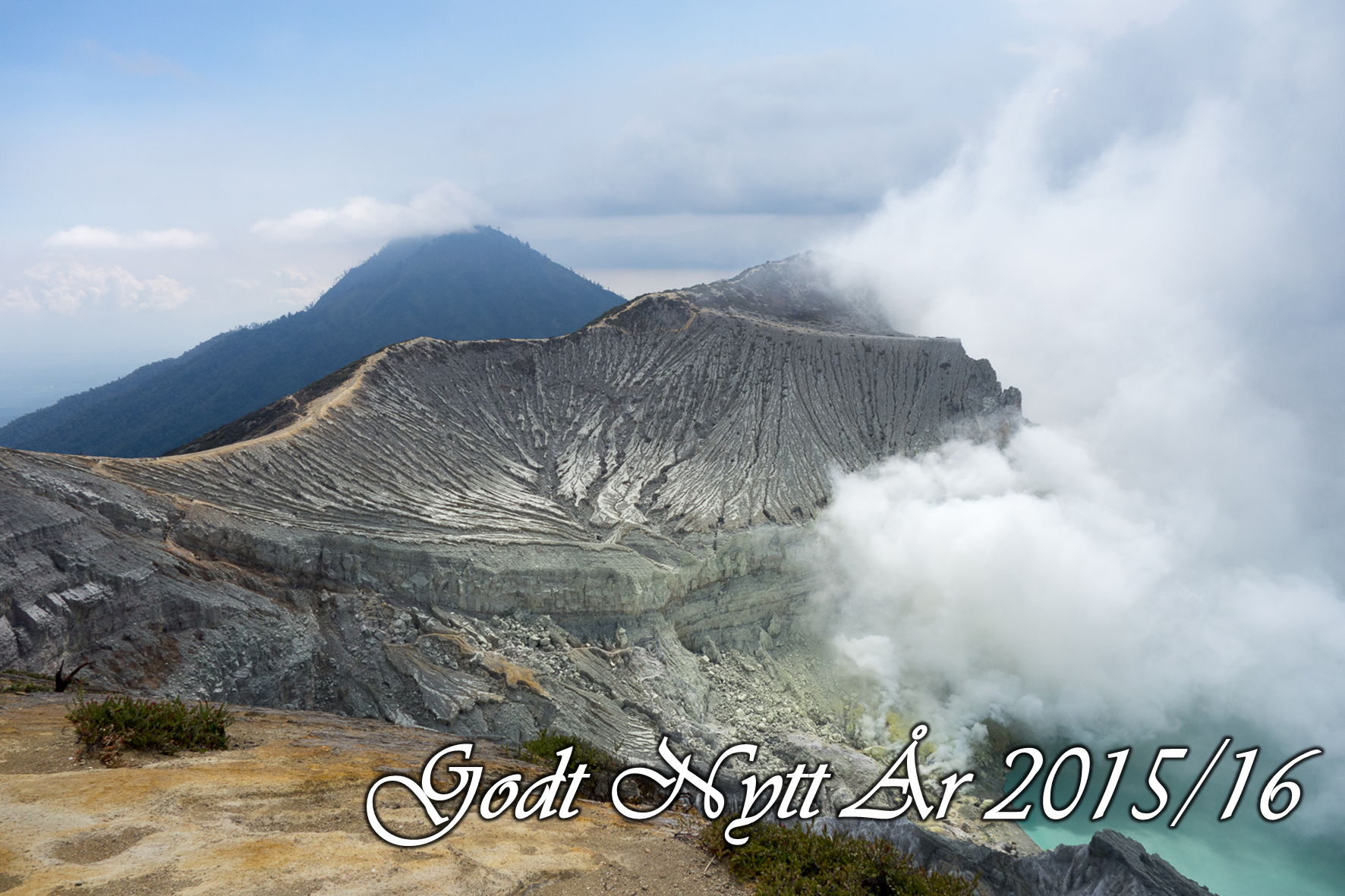
Godt nytt år 2015/16
Vyrde frendar, nye som gamle,
Like brått som det byrja er året 2015 kome til ende — og 2016 står for døra, reint og ubrukt.
Eg vonar det nye året vert rikt på framgang og opplevingar, at det vert fylt av lukke men at det vert fattig på motgang og svartsyn.
Eg vonar livet i det nye året vil leggje seg i laglege foldar og ynskjer dykk hermed eitt meir enn alminneleg godt nytt år.

Foto: Eld og svovel — nært møte med naturkreftene på Kawah Ijem på Aust-Java, Indonesia. Eitt av mange inntrykk frå eitt 2015 som i skrivande stund er historie.
-
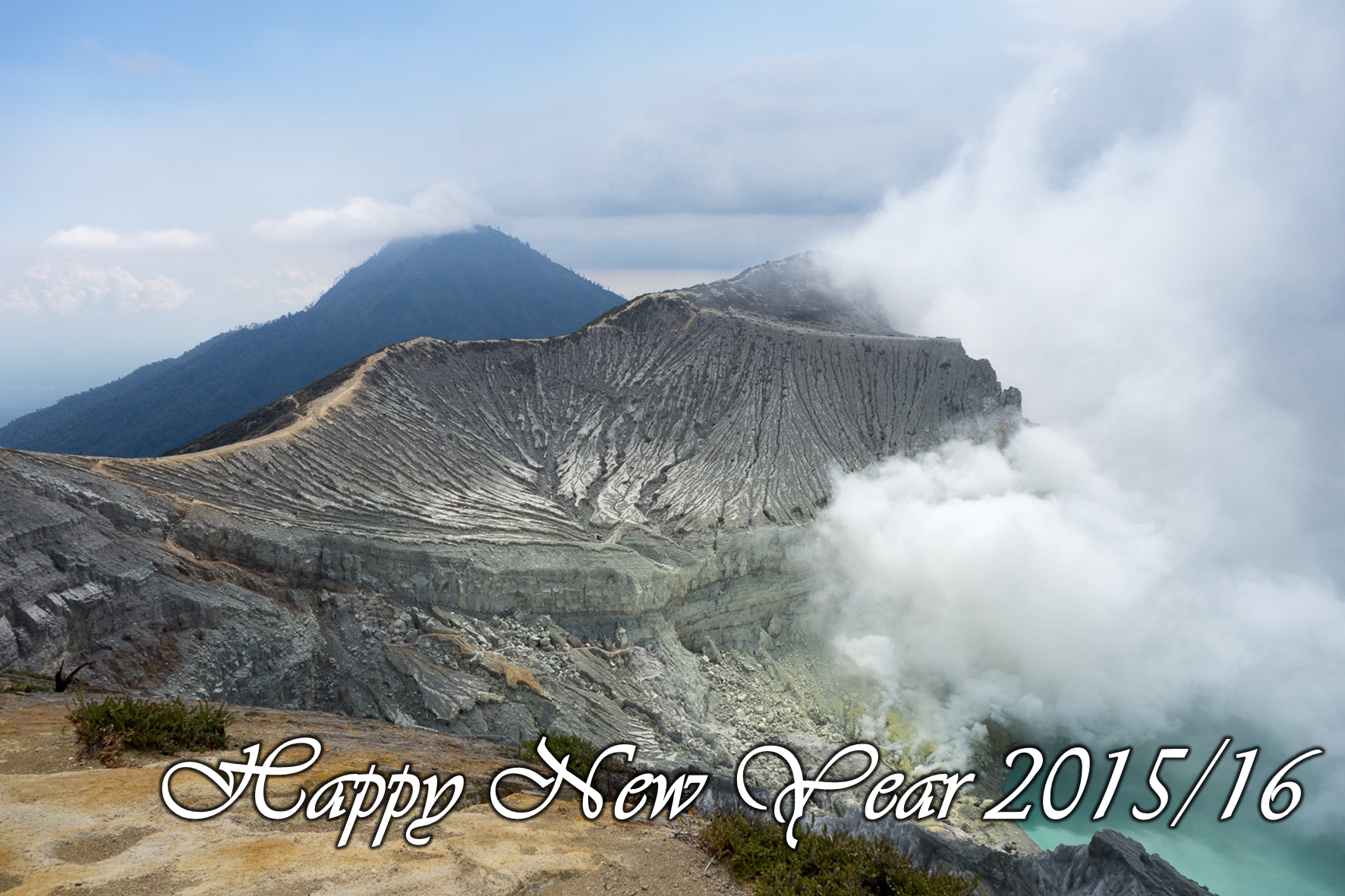
Happy New Year 2015/16
Dear friends, new and old,
As suddenly as it arrived, 2015 has ended and 2016 is at the gate. As it is, the year stands empty – but it is brimming with potential.
It is my sincere wish that the upcoming year will be prosperous, rich in experiences and filled with happiness – and similarly that it will be poor in adversity and pessimism.
I take this opportunity to wish you a particularly happy new year.
Photo: Fire and brimstone — up close and personal with the forces of nature at Kawah Ijen on East Java, Indonesia. One of many impressions from a 2015 that has now entered into history.
-
Linked Open Data in practice – An example from Abu Dhabi
[Article version of presentation delivered at the INSPIRE Geospatial World Forum in Lisbon on the 27th of May, 2015]
In this article I am going to introduce you to a business case for Linked Open Data from a project we are doing for Abu Dhabi Municipality and the Department of Municipal Affairs in the Emirate of Abu Dhabi.
In all probability, you know Linked Data equally well or better than myself, I will therefore not spend much time on describing technology but emphasize how Linked Open Data for addressing poses tangible economic and efficiency benefits in the day-to-day operation of Abu Dhabi municipality, covering the agenda items displayed on the screen.
I realize that the word municipality generally doesn’t bode well for the entertainment value of a speech. The word fills the mind with the color grey – and any bright or hopeful emotions one might have had are suddenly extinguished.
This was also the expectation I had when I boarded a plane to Abu Dhabi eight years ago to start working on a project to implement a new street addressing system there.
I had until then never heard of anyone in polite society successfully utilizing the phrase ‘I work for the municipality’ without the second party displaying notable interest in terminating the conversation at the earliest possible occasion.
Yet, when telling someone in Abu Dhabi that I was going to do a project for “the Municipality”, they were much to my surprise visibly impressed.
Air escaped their mouths, but it wasn’t the customary yawn. It was more along the lines of a ‘wow’. The municipality was powerful. The municipality was known. The municipality was respected.
But I digress, and though you will find that a principal component of this presentation consists of digression, let me temporarily, albeit momentarily, get back on topic…
It is the custom of every presenter who speaks of the many virtues of Linked Open Data to include this graph as at least one of their slides.
In order to comply with the genre, I am not going to make any exception to this rule.
However, my reason for including it is to use it as a backdrop for this…
I beg your apology for this unprovoked attack on the center of the Linked Open Data graph – but the thing is, in terms of direct, demonstrable economic impact, there are other registries that hold greater promise, than linking of business data to DBpedia.
Another thing I’d like to point out is that it is easy to get intoxicated by boxes and arrows – and forget that the true value of Linked Open Data relies not so much on the link itself as it does on what you link FROM and what you link TO.
I do not know how familiar you are with the United Arab Emirates. Likely you are acquainted with Dubai and their ceaseless efforts to build stuff that is tall, deep, wide, first, largest or in any other way stretching the definition of some superlative.
You may imagine elegant white tunics, expensive cars, oil, gold and infinite wealth.
There are elements of this stereotype that hold true. Yet, after living in the country for seven years, I feel compelled to add to that the Emiratis also are ordinary people in the best possible meaning of the word ordinary, they are wonderful, gracious hosts and overall an interesting, remarkable and capable people.
I am going to introduce Abu Dhabi by turning back the clock 60 years and give you an idea of what was then Abu Dhabi city.
The important thing to realize about that time is not that the Gulf was a largely undeveloped economy, consisting of palm frond settlements, the off fortification and pre A/C climate conditions.
The important thing to understand is how fast society on the Arabian Peninsula has changed in the span of 60 years compared to here in Europe.
With the discovery of oil, the Emiratis came into possession of significant purchasing power. They wanted to use this power to build a nation.
And build they did.
A lot of stuff – and incredibly fast.
Today, Abu Dhabi is a modern city that outshines many, perhaps most cities, in terms of the amount of concrete and glass edifices. Its skyline calls for comparison with the cityscapes of New York, Hong Kong and Singapore.
Yet, working fast is not without its perils.
We have all experienced the moments when, after sitting down to relax after a hard days work, we are suddenly seized by the uncomfortable feeling that there is something essential that we have forgotten to do.
For the people who built Abu Dhabi, one of these moments came when the city outgrew the size where it was possible to describe locations by referencing landmarks – They realized that it probably would have been good to have an addressing system.
You cannot use this oversight against the Emiratis.
When you try to catch up with contenders who have a 500 years head start on you – and succeed in overtaking them within 45 years, it is forgivable to miss a few things along the way.
An address is one of those things that people could not care less about. Unless, that is, they do not have one.
At that moment a number of problems manifest themselves.
- How to tell the plumber where you live as water is pouring out of your wall?
- What do you to tell the taxi driver when your house is not in front of a well-known land mark?
- How do you order a pizza?
The oversight was not principally the Emiratis fault. The Emiratis paid good money, perhaps too good money, for “first class international advisors”.
The thing with “first class international advisors” is that more often than not, they do not understand Arabic, nor do they understand the customs and culture of the local environment. Upon my first arrival, I regret to say that I was no exception to this rule.
Whatever the project may be, first class international advisors often try to import an undigested, and expensive concept, created for a different social and cultural setting, from Europe, from Australia or from the United States.
For, how could anyone aspire to achieve excellence by any other means than by imitating “us” in the “Western World”, who by our own BBC and CNN definition are excellent?
Given this premise, it is easier to understand why the first attempt at addressing Abu Dhabi in the 1980s turned out a bit awkward.
In recognition of the melting pot of different languages and cultures that co-exist in Abu Dhabi, taking locals, white-collar and blue-collar workers as one, the first class international advisors thought street names to be too difficult for people. It was even put forward that text of any kind might be too difficult, since many drivers could not read.
While this sounded preposterous, a quick glance at the traffic accident statistics suggest that they may have been on to something.
While the Arabic alphabet is beautiful, it poses a great challenge to someone brought up with Latin letters. The “Arabic numerals”, however, look a great deal more familiar to us. It was therefore the idea of the first addressing project in Abu Dhabi to use only numbers for addressing the city.
And they did in truth use numbers.
They used a lot of them.
So many, in fact, that to identify a single house anywhere in the city it was necessary to know up to 11 digits in a particular sequence without any form of error tolerance lest you end up in a completely different part of the city than where you intended.
The first few digits represented a zone, the next few digits a sector, the third group of digits a street and finally a building number followed by an extra, unused digit – that was reserved for an unspecified future requirement.
It was, in short, an “intelligent” address.
This is interesting, as the problem of “intelligence” is the same that we face in Linked Data, when we are trying to agree on persistent URI schemes.
Should they be intelligent and unique or should they simply be unique.
Personally, I belong to the school of thought that believes that anyone contemplating intelligent persistent identifiers ought to be beaten with a stick.
However, in the absence of a legal instrument to sanction stick beating for URI related crimes, I have had to resort to simply repeat my warnings.
I speak from experience. Bad experience.
Identifiers are not to be read as a book. However, because the principal use of persistent URIs in the scientific community is discussing single concept graphs on projector screens – we have an urge to understand what the URI we see up there on the screen means.
However, once systems become operational with proverbial “tons of data” in them, the persistent URIs are used by systems for systems and their human readability is no longer an issue.
For the exact same reason, I find that addressing ought to be intelligent because the end-user is a human.
This was where the first addressing system in Abu Dhabi was flawed; it consisted exclusively of numbers.
Sequences of more than five numbers in a row are not so easy to memorize– and memorize people must – if addresses shall be useful to them.
15 years ago, we had the capacity to remember, with some degree of accuracy, the phone numbers of our close family and a few friends. Yet, the era still gave rise to the universally understood phrase “wrong number”.
That is because numbers are not particularly good for memory recall.
This is where street names come into play, particularly if people are made aware of their meaning and can form associations to the meaning, not just the sound. When introducing meaning, however, we stumble across the first obstacle to successful street name based addressing.
People are passionate about names.
More specifically, people are passionate against some names – and for others.
Try to rename a street anywhere in the world and you spark debate in the media as you may see from the samples I presently show on the screen.
Try to introduce 10 000 new street names into a city within the span of 2-3 years and you have created yourself a very difficult task indeed.
I can say with my hand on my darkened consultant’s heart, that no institution that I have ever worked with, and I’ve worked with a good few, have ever shown such democratic care for what the citizens think as Abu Dhabi.
Consensus is always the preferred way forward – rather than rejections based on majority votes or technical assessments.
An appeals process that permit citizens to react to and request name changes is put into place – and practiced rigorously. This reminds me of a particularly entertaining street renaming process that took place in Brussels, more than 200 years ago and that you can see on the screen right now.
The use of the address for locating people and delivery points for goods and services means that addresses are very important for linking business data.
- Make a purchase and your living and shopping pattern is mapped through the data that are recorded from your consumer loyalty card and your credit card
- Take up a cable TV-subscription, order a taxi – or a pizza. They all ask for your address, they all use it and they all store
Thus, what commercial viability is concerned, addresses pose a far greater value proposition as a central linking registry for Linked Data than for an example DBpedia does.
However, we cannot in good conscience link to a street name and a building number in Linked Data – we need persistent URIs.
I think it is appropriate to say that we stumbled over Linked Data in the Abu Dhabi project. The original idea was to provide additional way finding information for people based on embedding a QR-code with a link to a downloadable app on about 50 information boards at key locations throughout the city.
Simultaneously, there was a need for individually identifying all the signs in the city for a sign maintenance system. All signs are owned and maintained by the government and it is necessary to track these assets with respect to maintenance state and life-cycle management.
In the end, we decided to equip ALL signs in Abu Dhabi with an individual QR-code, more than 80 000 in number.
Then came the question that led us to Linked Data: what do we put in the QR-code?
We could encode a unique number or an alphanumeric string – but then any client application would have to be aware of the domain in which the unique value would be valid. However, if we encoded a URL, the client application would instantly know what to do about the identifier, could open a web browser and load the corresponding content.
This is where our GIS data models converged with Linked Open Data. The public information behind the URL was not a strong enough business case in itself. We needed to open up something to the service provider and business community.
We let the URL produce different results depending on how it is being accessed in accordance with good practice for dereferencing of persistent URIs.
For a business-to-business application, requesting XML or JSON it acts as a web service returning a well-defined format that can be used to populate lookup-boxes in electronic forms.
For a business-to-consumer scenario where a citizen scans the QR-code on his regular, Internet connected smart phone, it serves up a web page with information about the address.
Projector screens are not particularly good for scanning QR-codes – but if you were to do so, you would see that the persistent URI used for addresses in Abu Dhabi also qualifies for a thorough stick beating.
I am sad to say, that it is intelligent, with all the problems that that encumbers.
Still, it is unique.
While the addressing registry constitute Linked Open Data, much of the value-added business data constitute Linked Private Data.
If all data are open it is likely that the data are not sensitive or critical; where there are no critical data there is limited willingness to pay; where there is limited willingness to pay – there is limited business.
Even for the isolated purpose of managing the signs, using persistent URIs to identify individual signs is cost-neutral.
However, the real value proposition for the residents of Abu Dhabi – and for the service providers – lie in the efficient identification and verification of locations across all government and private sector entities that offer services to residents and visitors.
For the past year, many working meetings have been arranged with all utility service providers and government agencies that deal with location information in the Abu Dhabi; the purpose being to have them use the addressing data as their location reference frame for their customer relationship management. Parties who will adopt the addressing system for CRM include
- The National Identity Authority
- The statistics center and census authority
- The food and health safety authorities
- Water and electricity authority
- The gas companies
- The cable-TV and internet providers
- The taxi and delivery companies
The message to take away from this talk is that the publishing of key registries such as addresses, property identifiers and building identifiers will be important catalysts to foster further business value from Linked Open Data both in Abu Dhabi and in the rest of the world.
Therefore, to any custodians of such registries. Get them on the air as soon as you can. Please feel free to come and visit us in Abu Dhabi or Norway if you’d like to learn more.
I have great expectation for the future convergence between Linked Open Data and GIS technologies.
-

Godt Nytt År 2014/15
Vyrde frendar, gamle som nye,
Det er symptomatisk for 2014 at nyttårshelsinga mi kjem tre dagar på overtid. Det har vore eitt utmerkt år, likevel er det ei klar moglegheit for at 2015 kan kome til å bli enno betre.
Det ligg ikkje i konsulenten sin natur å ta klare standpunkt, men utan reservasjonar, ansvarsfråskriving eller “småstigla” fotnotar av noko slag, ynskjer eg deg hermed eitt år fylt av gode, særeigne opplevingar; eitt år som vil gje deg framgong i alt du set deg føre – og, sist men ikkje minst, eitt år til med toleleg god helse.
Eg nærar også eitt ynskje om at 2015 vil bere med seg møteplassar, vere dei seg sosiale eller yrkesretta, og at det nye året må verta eitt betre, rikare og meir interessant som følgje av dette.

Regnboge i månelys: Dette årets nyttårshelsing er eitt foto av Foz do Iguaçu, teke ei sein natt i Desember. For kloke menneske er det naturlegvis ingenting oppsiktsvekkande over dette, men det hadde aldri slege meg at regnbogen trivst like godt i måneskin som i solljos, Dette er eitt av mange gode minne frå eitt 2014 som no er historie. Lukkeleg 2015 alle saman!
-
Happy New Year 2014/15
Dear friends, new and old,
It is symptomatic of my life in 2014, that I am three days late with my New Year’s greetings. Regardless, 2014 was a great year, but there is a distinctive possibility that 2015 may be even better.
Without reservations, disclaimers or footnotes of any kind, I wish you a year that will be rich in extraordinary experiences, a year that will bring you prosperity in all your endeavours and, last but not least, a year of continued good health!
It is also my wish that 2015 will bring opportunities for us to meet, be it socially or professionally, and that the year shall be better, richer and infinitely more interesting for it.

Rainbow in the moonlight: This year’s greeting card is a photo I took of Foz do Iguaçu, late one night this December. It had never occurred to me that rainbows also appear in moonlight. This will remain with me as one of many, many cherished memories of a 2014 that has now entered into history. Happy 2015 everyone!
-
Refleksjon II

Det er ein god del som er verre enn dette.
– Stein Runar Bergheim, BRU-DOH, 25.11.2014


