We had just arrived at Bluff Beach and were looking out at the decidedly violent waves that were pounding the shore. An unspoken question formulated itself in our minds as we gazed on the foaming surf
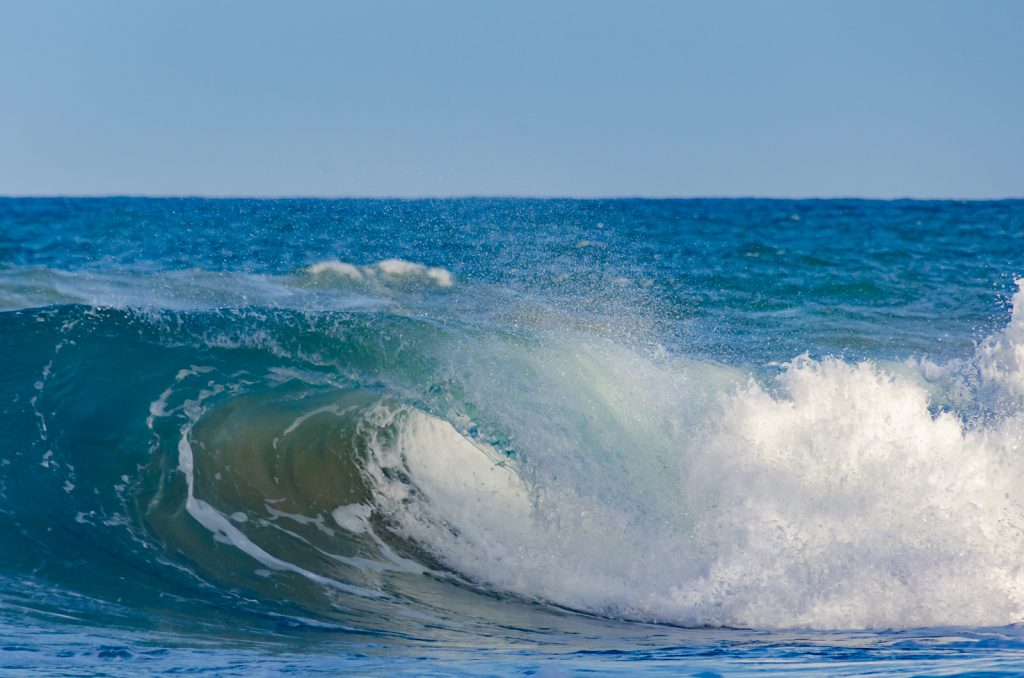
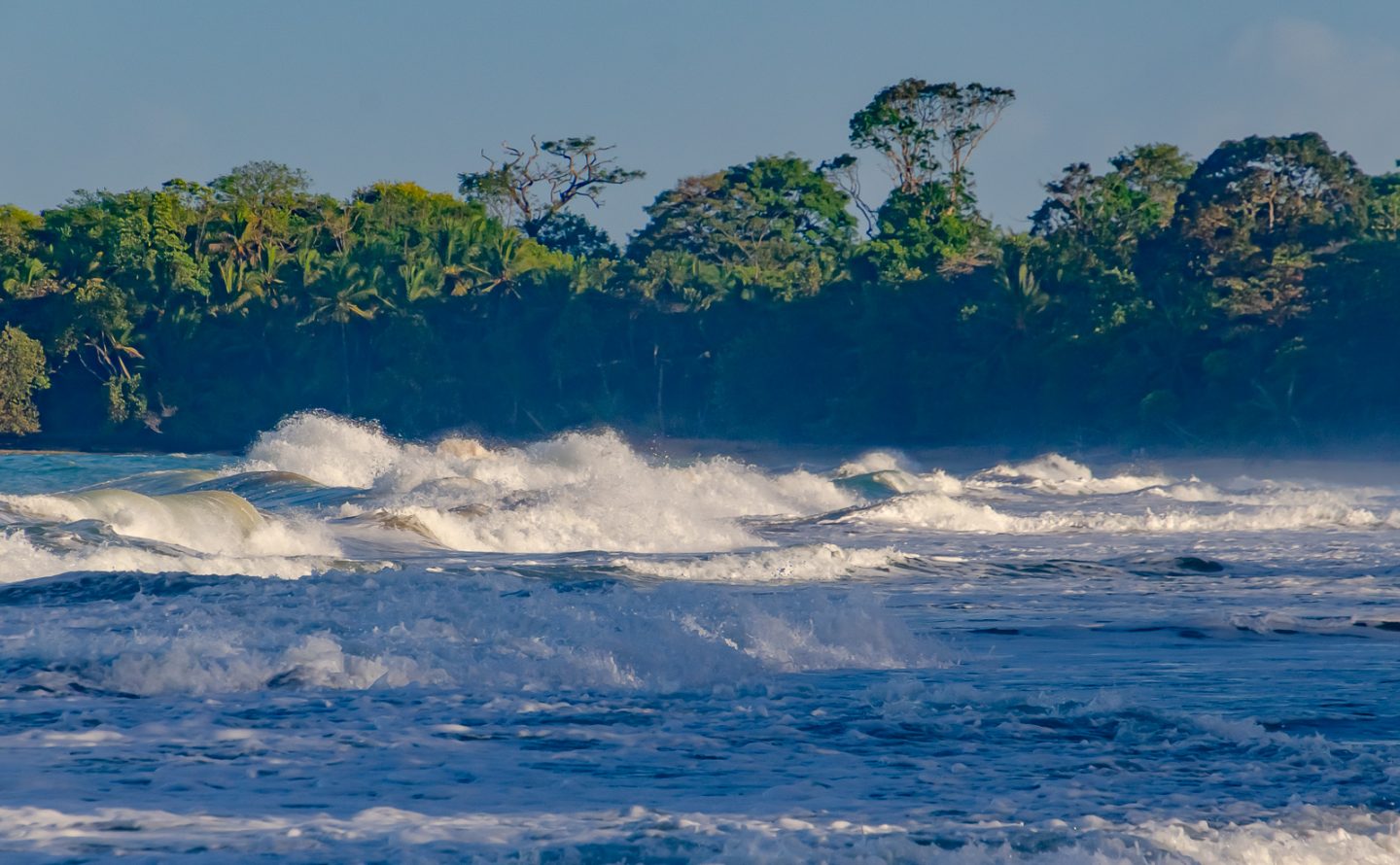
We had just arrived at Bluff Beach and were looking out at the decidedly violent waves that were pounding the shore. An unspoken question formulated itself in our minds as we gazed on the foaming surf
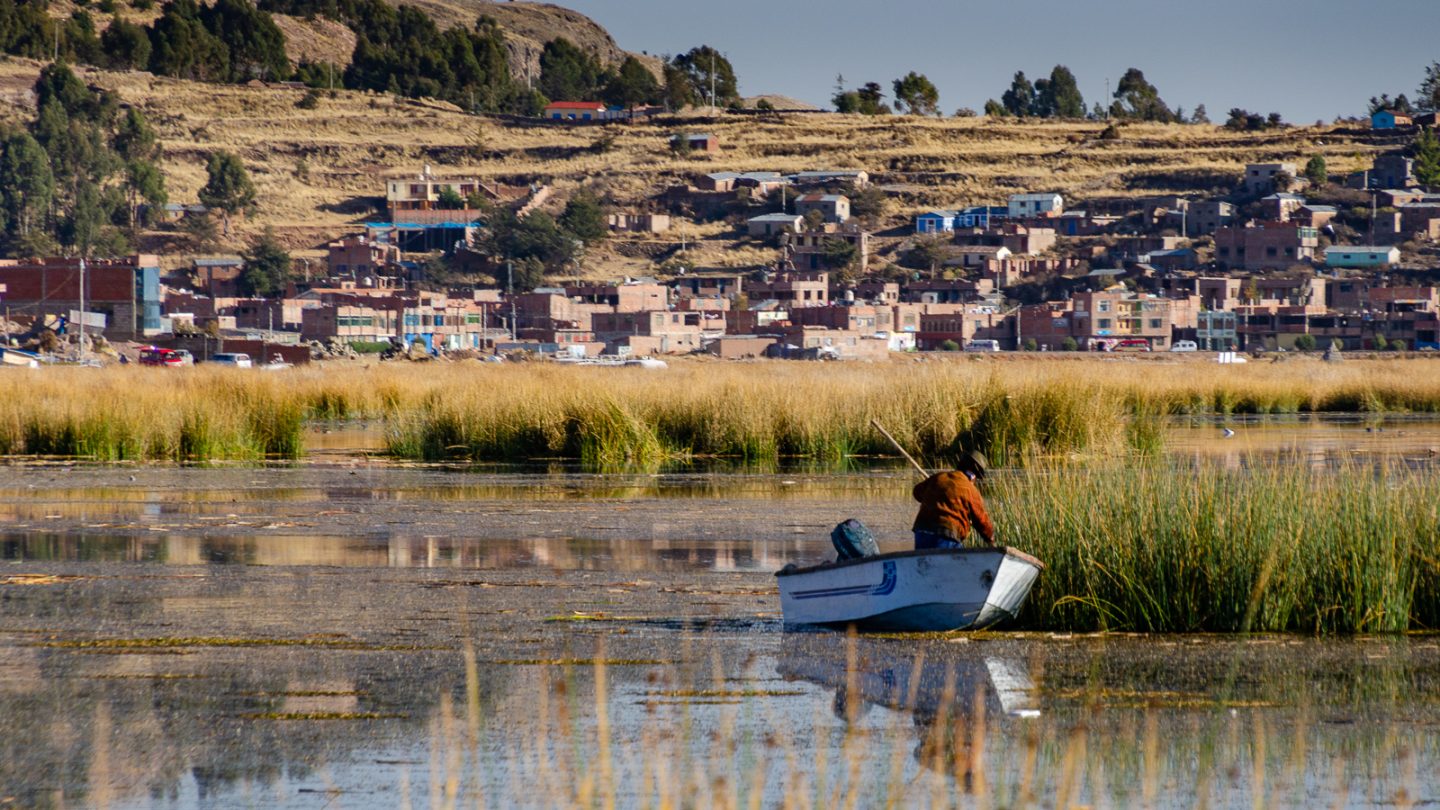
Except for lake-fishing, the career paths that lie open to the people of Uros are limited on the islands. They could go ashore, but many inevitably find that when working onshore, it is easier to live onshore – and leave the islands.
Once or twice a day, the peace of the lake is broken by tourist boats, and loud, gullible foreigners pour onto the islands.
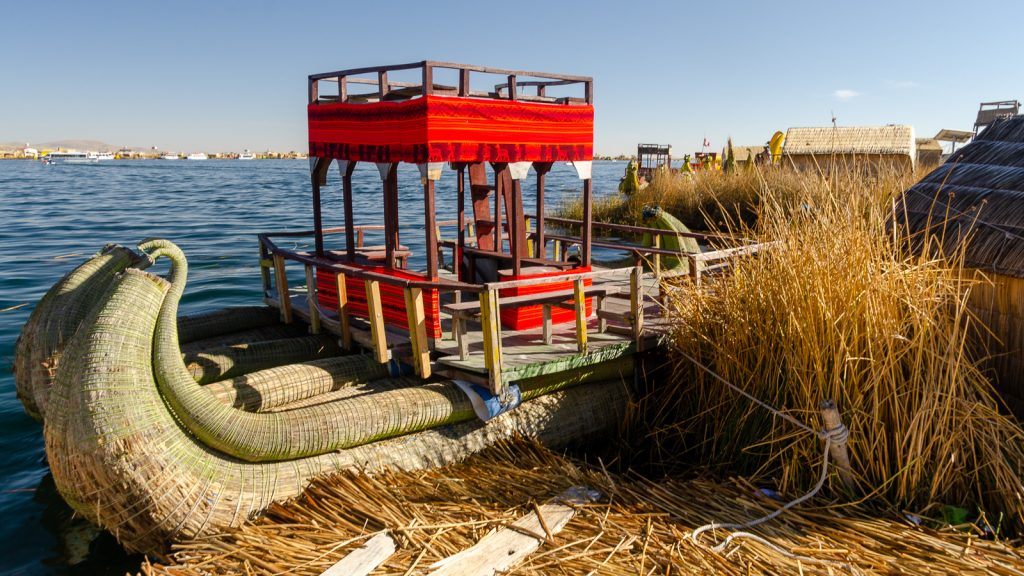
Demonstrations on how to make an island are given, souvenirs are sold, and rides in ‘traditional’ boats are offered. Some islands also have restaurants and B&Bs.
It is hectic on the islands while this goes on. It is possible to understand the point of view of people who after an hour of this chaos dismisses the Uros as a commercial hell-hole.
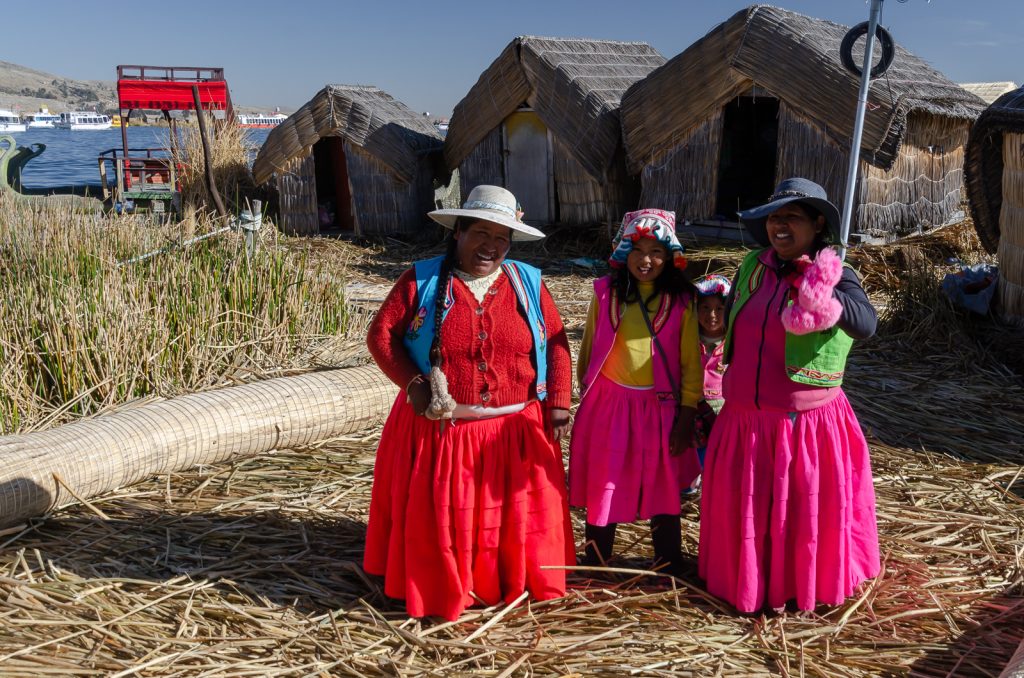
Visitors are going to feel bad about not buying the stuff that the big-eyed and colourfully dressed Uros-people are displaying. The islanders know this, and they also know that by making you feel just a little bit worse, you may buy something.
But this is a game. You should, of course, buy something. The islanders should be left with some reward for the trouble of having you. It would, however, have felt better if this was included in the tour. That is not the nature of things in Puno.
Looking past that, the Uros Islands remain unique. They may not be life-altering but exciting nonetheless. I, for one, am happy to have been there.
Stepping from the boat and onto a floating island is a peculiar feeling. You are standing on something that is not entirely solid, nor yet do you sink through.
There are many tiny islands. Each one is surrounded by water, and to visit your neighbour or school, you must use a boat. The school also happens to be floating.
As a bonus, the Uros Islands also sit in a spectacularly beautiful natural setting. Brace yourself for the onslaught of sales, but go. Next time—if I’m lucky enough that there’ll be one—I’ll stay overnight.
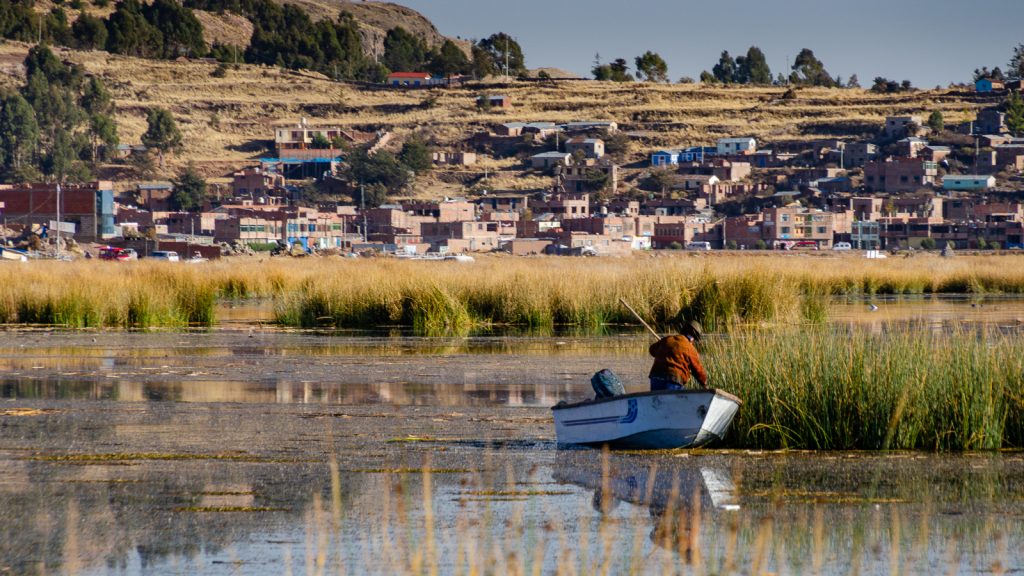
I had read up on the floating Uros Islands before arriving in Puno. I had become particularly fond of a message board, that discussed the relative merits of visiting these islands.
⠀
Public opinion was divided. On the one hand, a visit to the Uros Islands was a life-altering experience that must not under any circumstance be missed. On the other hand, they were a terrible tourist trap, devoid of anything or anyone authentic, and should be avoided at any cost.
⠀
The users had strong and polarized views on the topic. The discussion had descended into an exchange of personal insults before finally being terminated by the moderator.
One user had raised questions about the mental health of another user’s family. That user had then proceeded to describe in rich and colourful language, into what part of the human anatomy, he thought the first user might profitably stuff his head.
⠀
The camp that appeared to gain the most traction on the message board argued that to learn anything about Inca culture, it would be necessary to move here. If you would simultaneously buy a poncho, take up pan-flute playing and start worshipping the sun-God, Inti, this might well be a start. Scratching the surface, so to speak.
⠀
While this might well have been so, I didn’t have that much time at my disposal. And since there wasn’t a poncho in South-America that would fit over my head, I had decided that the Uros Islands were for me.
⠀
A month in advance, I had prearranged a boat to pick me up at my hotel at dawn. From time to time, I had pondered over what sort of boat I might have rented. I had paid a pretty hefty price for it, but then again, it was a special request. In my head, I had pictured a tiny boat with an outboard motor.
⠀
As I approached the pier at Hotel Libertador, I saw my mistake. Instead of a rowing boat, I had an extensive tour boat with a capacity of thirty or more passengers wholly to myself.
⠀
I also had a captain and a guide that I didn’t know exactly what to use for.
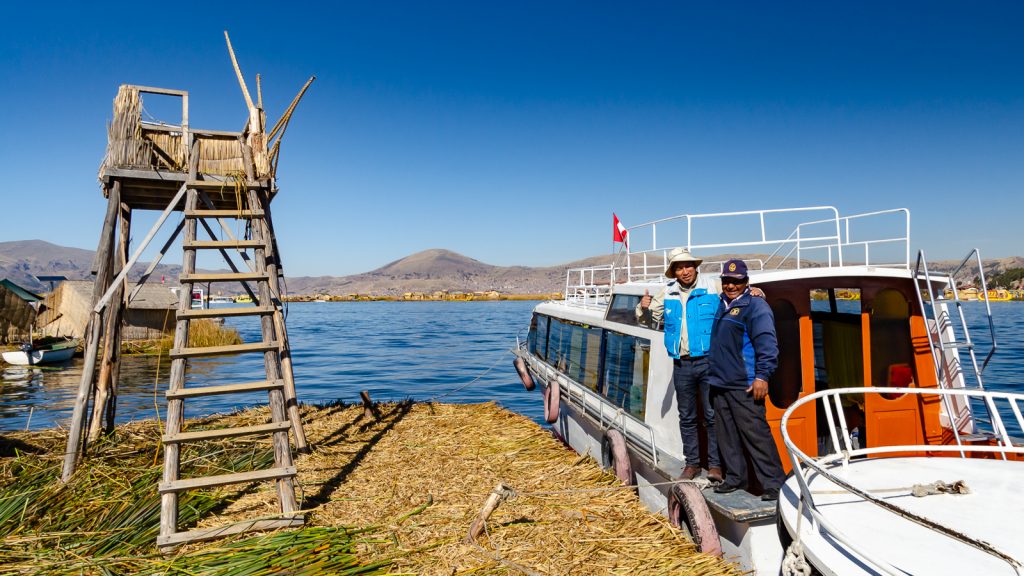
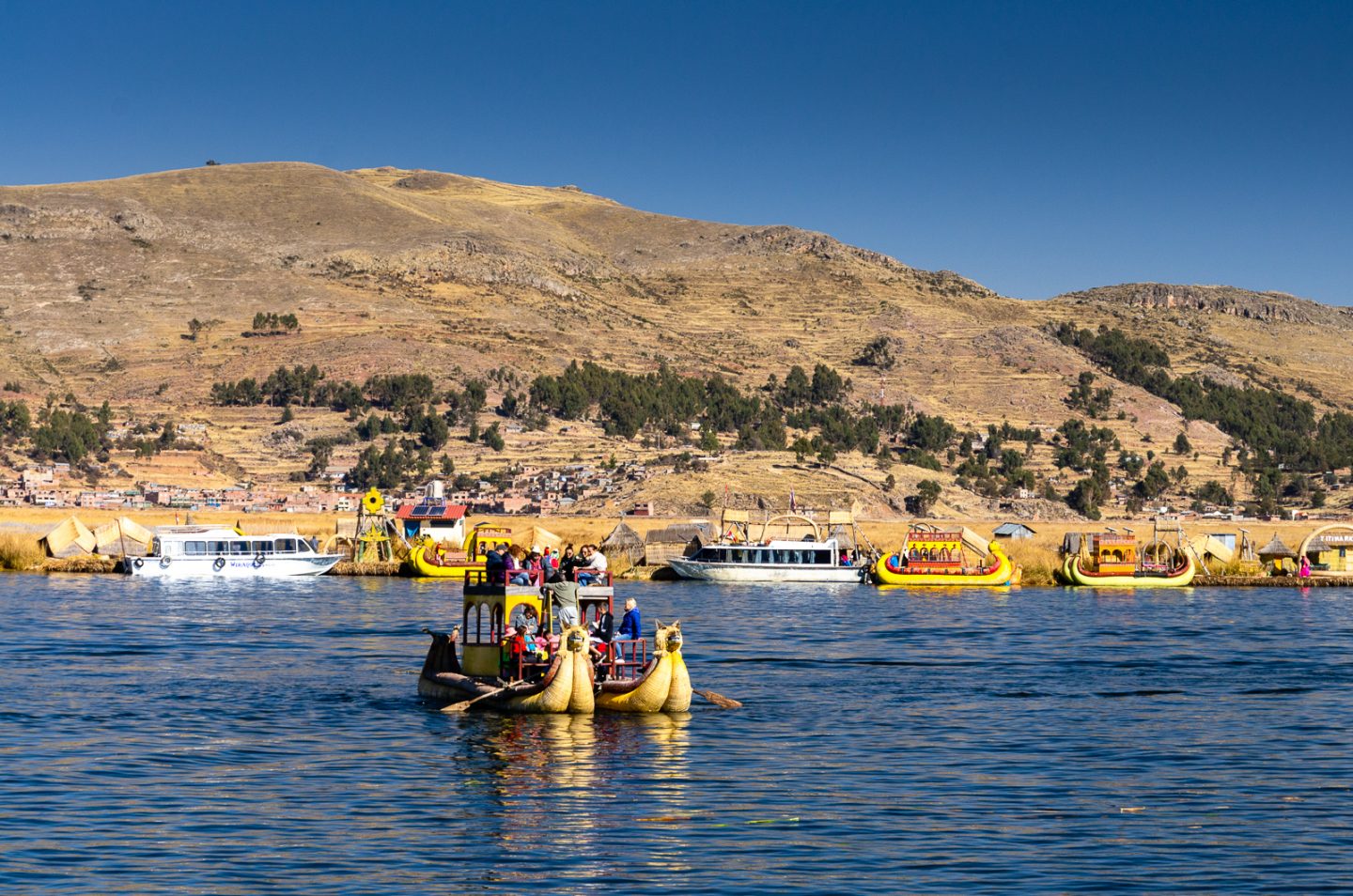
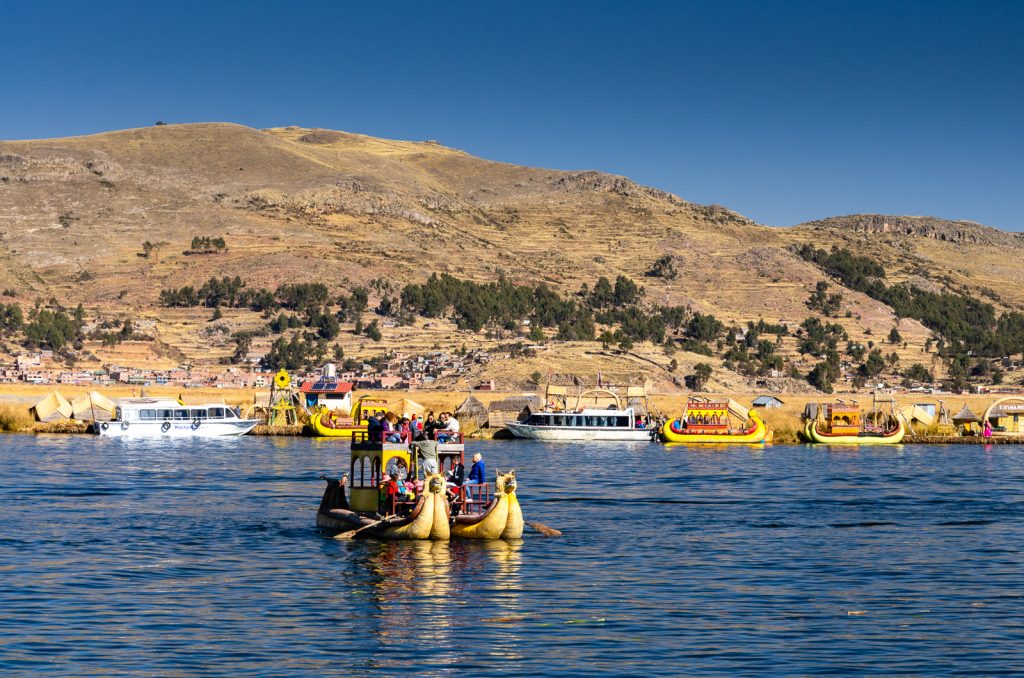
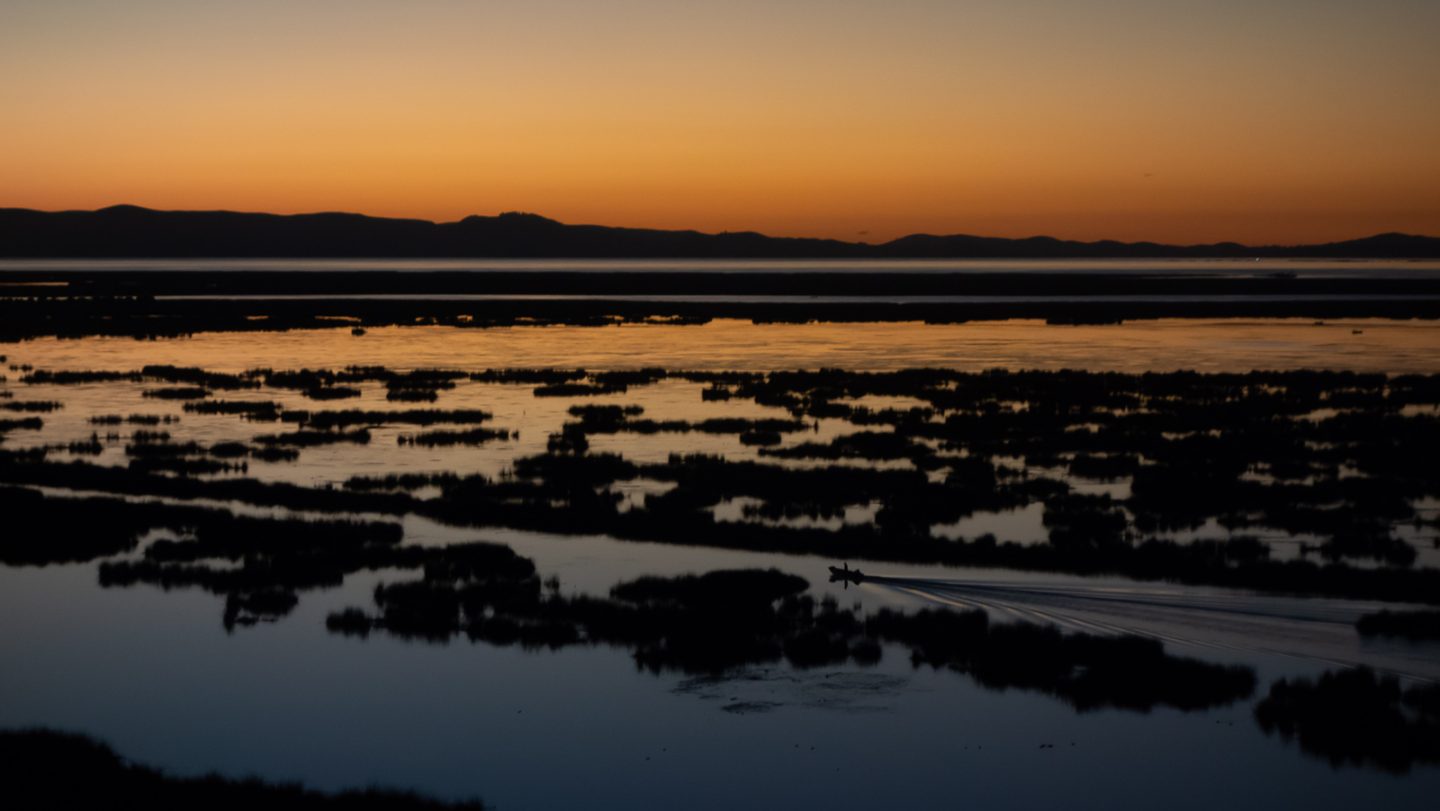
As my Uros cruise began, we passed by a boat of the type I had expected to find myself in. And that is the photo above.
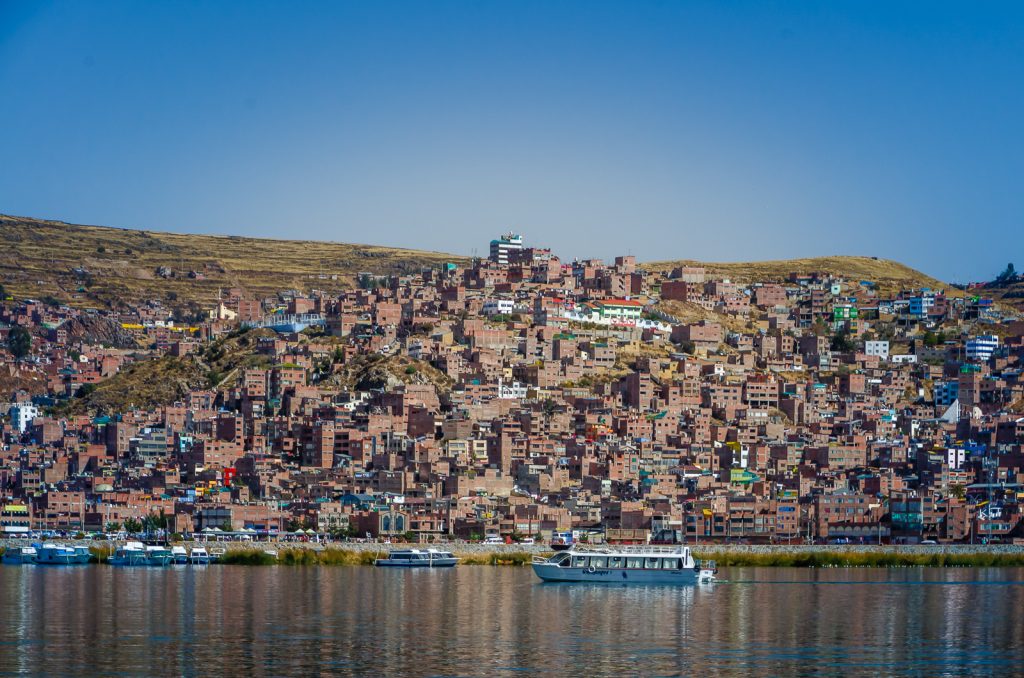
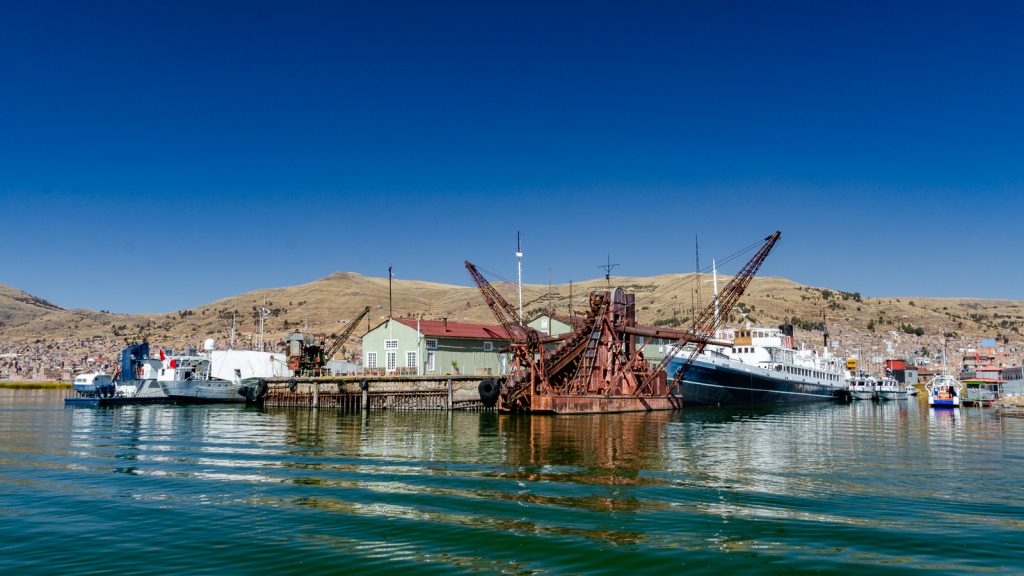
My mid-life crisis had primarily been a peaceful experience; there was no motorbike in my garage. Notwithstanding, some profound change had come over me. I had started to consider security when choosing travel destinations. Until recently, I had felt that a high crime-rate added to the ‘exoticism’ of a place.
This time, I had not overlooked that Lonely Planet described Puno in terms that could only be called unfavourable. I had therefore booked myself into an upmarket establishment just outside Puno, the Hotel Libertador.
This was a perfectly serviceable accommodation machine – but lacked in personality. Encased in a white concrete box, it had a large atrium lobby with an unremarkable bar and an indifferent souvenir shop. There was also a jewellery stall awaiting husbands who had made or were about to make, expensive mistakes.
On the positive side, however, I was not robbed. Nobody with sinister intentions seemed to take any interest in me. Nor did the reception manager or the bartender.
I decided to call it a night.
The altitude didn’t agree with me, and I woke up several times from shortness of breath during the small hours. Finally, it turned out to be morning. A fire was lit in the eastern sky, and I could see the blue-to-orange gradient of the sky mirrored in the water. A small boat made its way out on the lake through a corridor between the reeds.
Dizzy with anticipation, or possibly suffering from oxygen deprivation, I leapt to my feet without bothering to dress.
Finally, I had seen Lake Titicaca through my own eyes. And on the backdrop of my floodlit room, Lake Titicaca, without ever having had a say in the matter, had seen me.
Ten and a half hours on a train IS ten and a half hours on a train, no matter how nice that train may be. As we entered into the final hour of our journey, daylight was gradually giving way to dusk.
The bar was closed, the tabs had been paid, the shock of the accrued expenditure had been digested. My fellow passengers were tired and busied themselves by organizing an impressive array of loose possessions into expensive-looking travel bags.
This meant that the observation car was now empty.
That is, it was empty except for a German with a battle-worn Leica-camera, who was swearing prolifically to himself after checking each exposure. He allowed himself the briefest of interruptions to utter an indistinct ‘hello’, before resuming his snapping – and cursing.
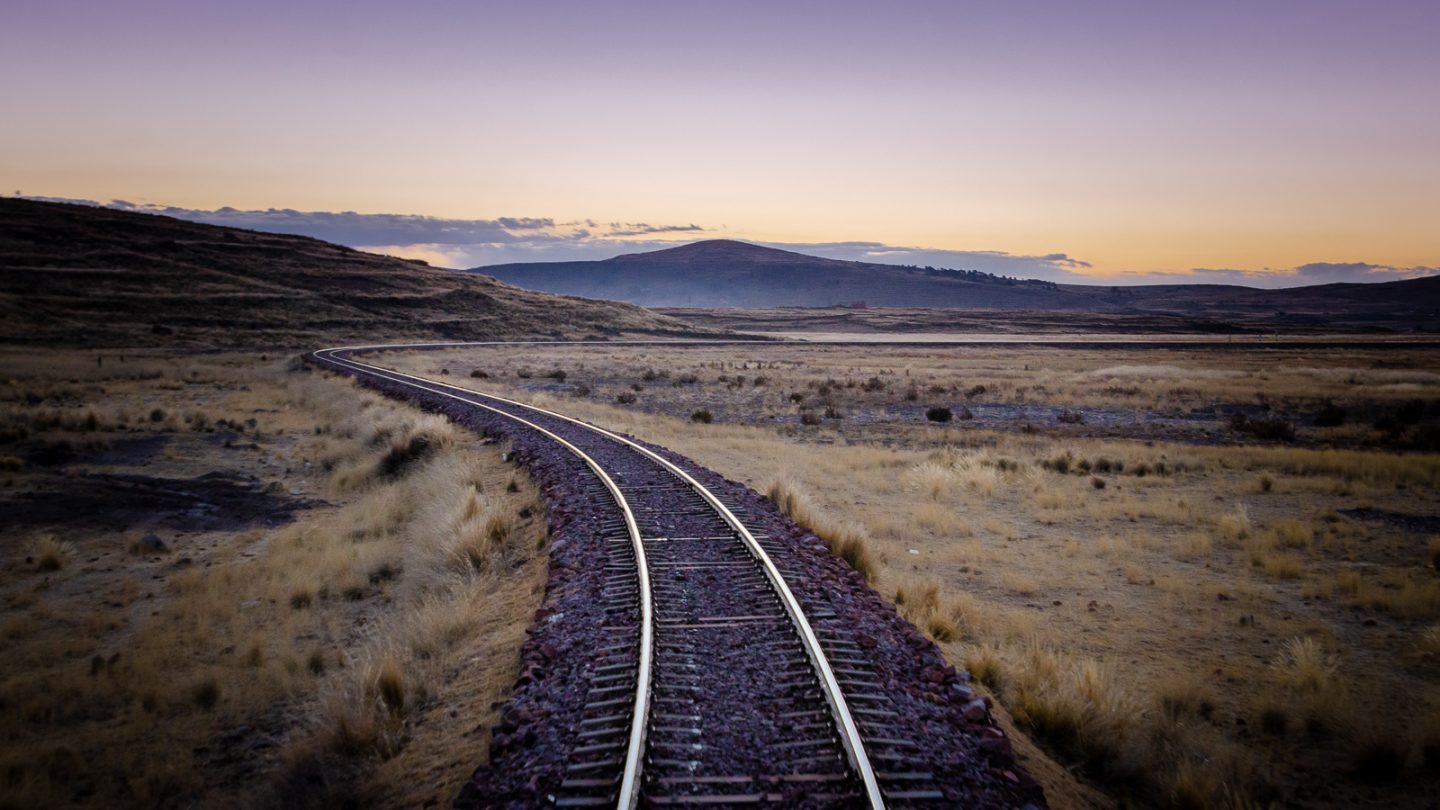
The sky was deep blue, and the horizon was turning yellow. The last light of the day reflected off the top of the rail tracks that curved gently into the distance. This was a good hour to be alive, this was a good hour for photography.
But not for the German.
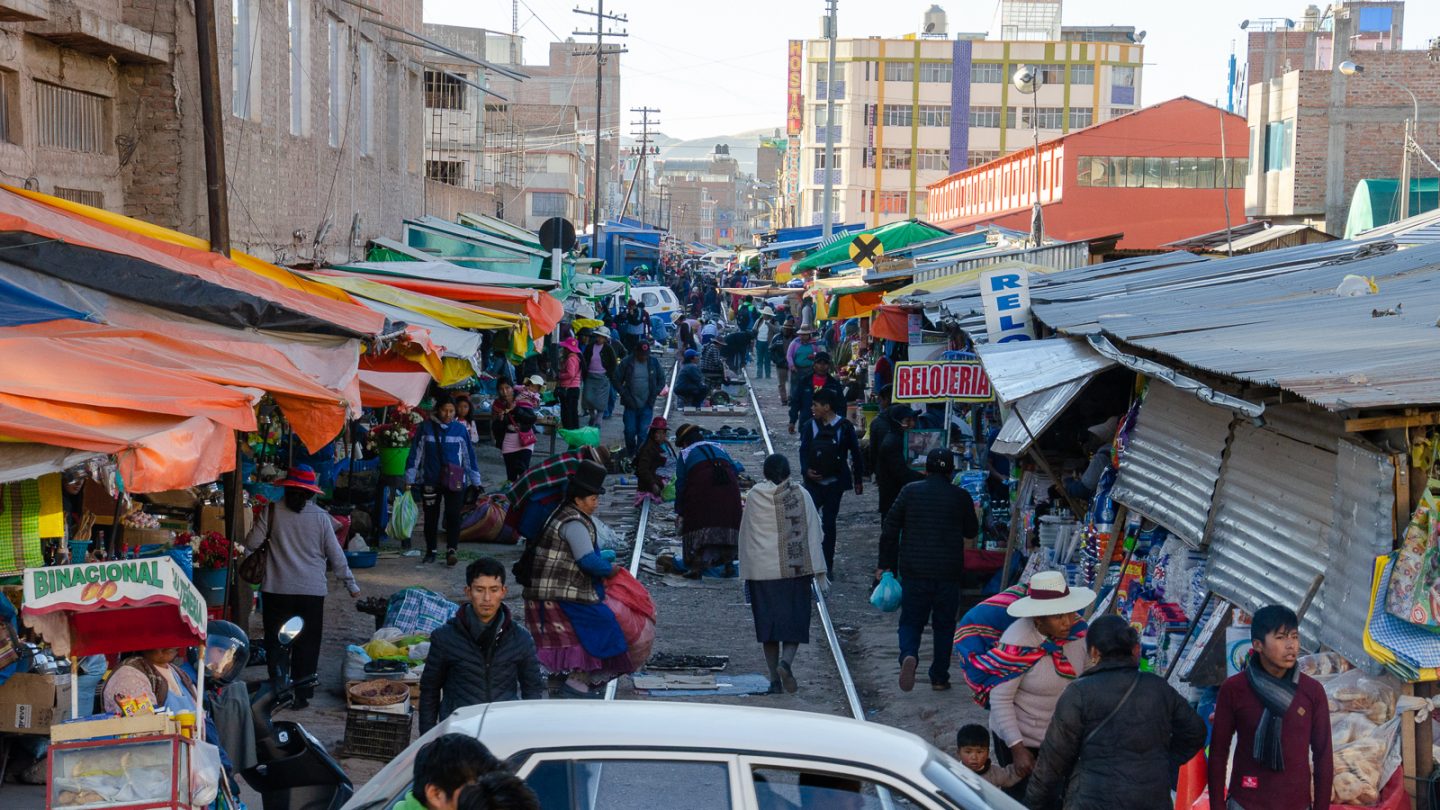
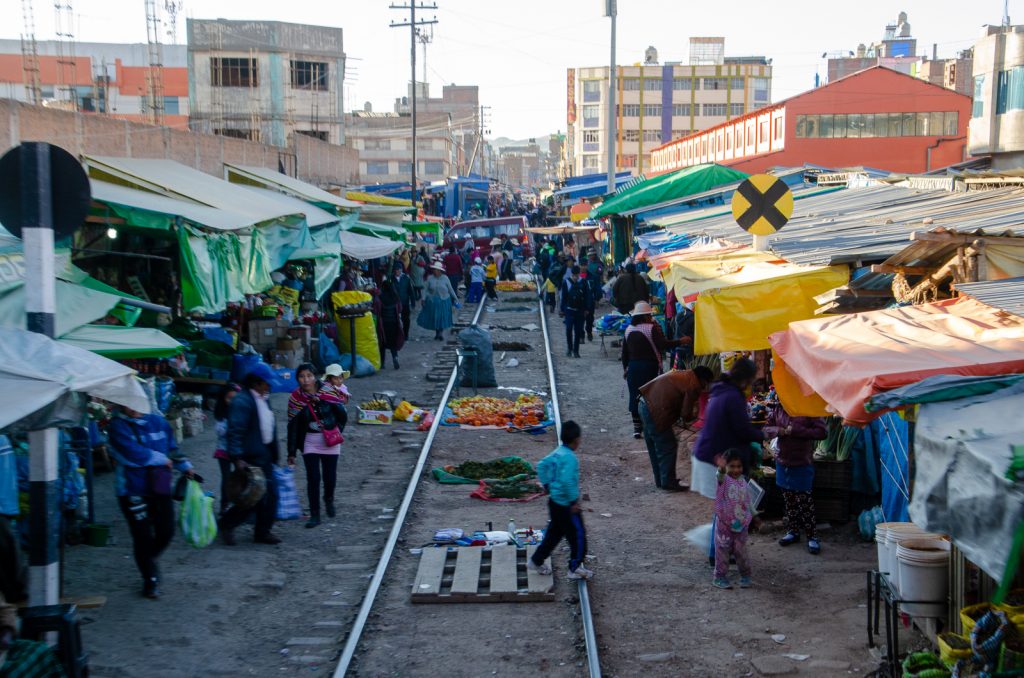
As the afternoon drew on, the Titicaca Train slowed down as it passed through the city of Juliaca.
I have spent much of my working life around urban planners. Many of these are architects and like to wear black polo neck sweaters and shroud themselves in a mist of obscure terminology. They love words like ‘arcology’, ‘conurbation’, ‘ekistics’ and ‘strollology’.
When people invariably ask what these words mean, they like to repeat the offending term with a francophone inflexion and an air of supreme condescension.
Urban planners do not much like ordinary people. Still, they accept their existence on the premise that without them, there would be no urban areas to plan. Ordinary people do not particularly like urban planners either. This becomes manifest at social get-togethers, where planners often are left to themselves.
While urban planners like to think of themselves as artists and cities as their canvases, more often than not, the town under planning preceded the planner by several centuries. By the time the urban planner arrived, the only art that remained was to make the best of a bad situation. That, however, can be a quite useful skill.
Juliaca, a city famed for its illicit trade and high crime rates, had enough of a bad situation to have profited from the services of any number of urban planners.
It is estimated that billions worth (USD) of smuggled cocaine and gold comes through here annually and that 60% of the residents, directly or indirectly, are involved in the trade. Still, most of them lead impoverished lives.
Crime pays – but for most involved, not very much.
The only remaining vacant land in Juliaca was the rail track. This was, however, only required when there was a train around, which wasn’t very often.
Juliaca’s inhabitants, therefore, had decided that this was a suitable location for an open-air market. The track was lined with stalls, and the swills between the rails were used for fruit, vegetable and raw meat displays.
As the train passed through the city, stalls were temporarily dismantled only to be reassembled after the last car had passed.
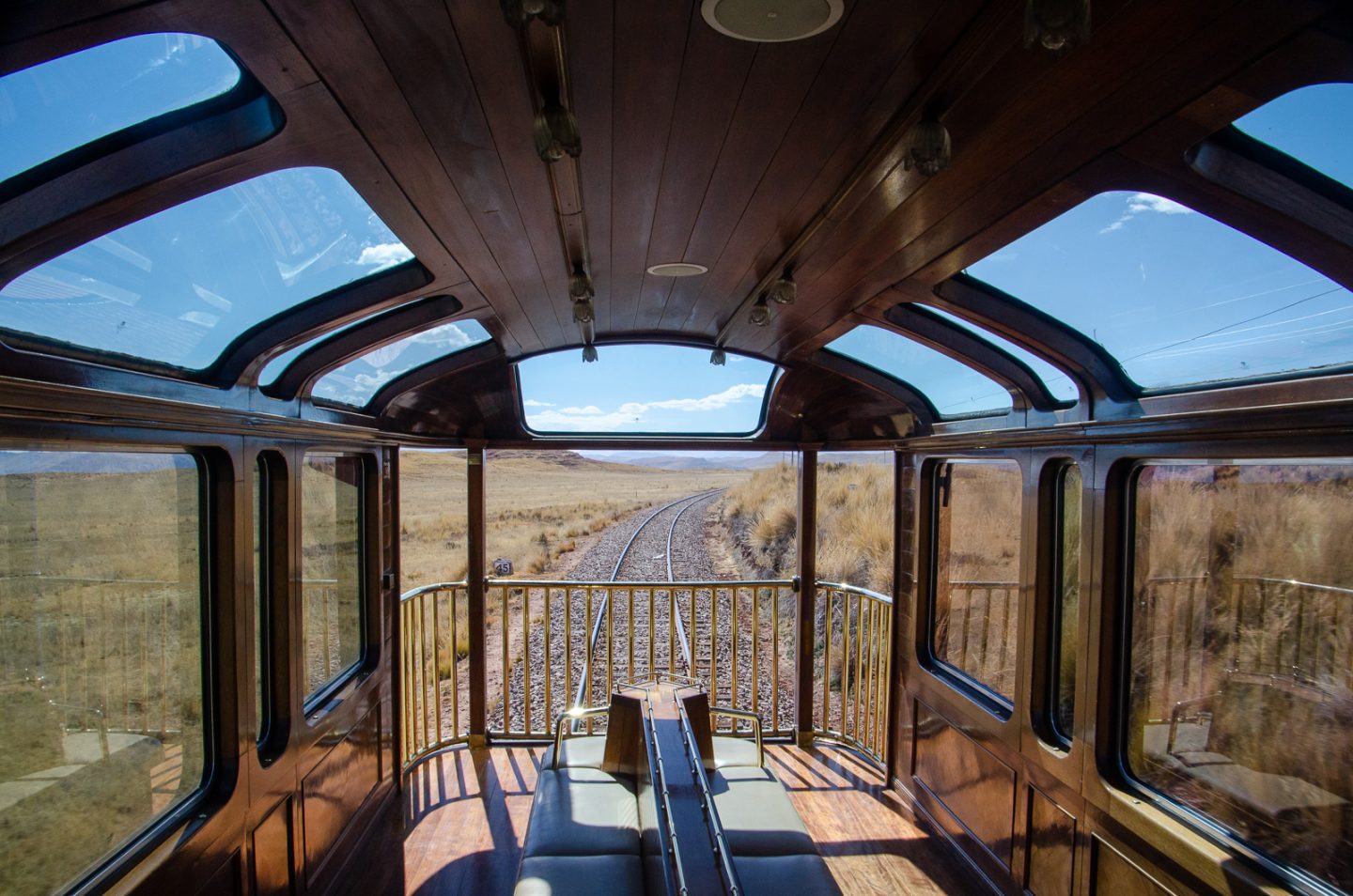
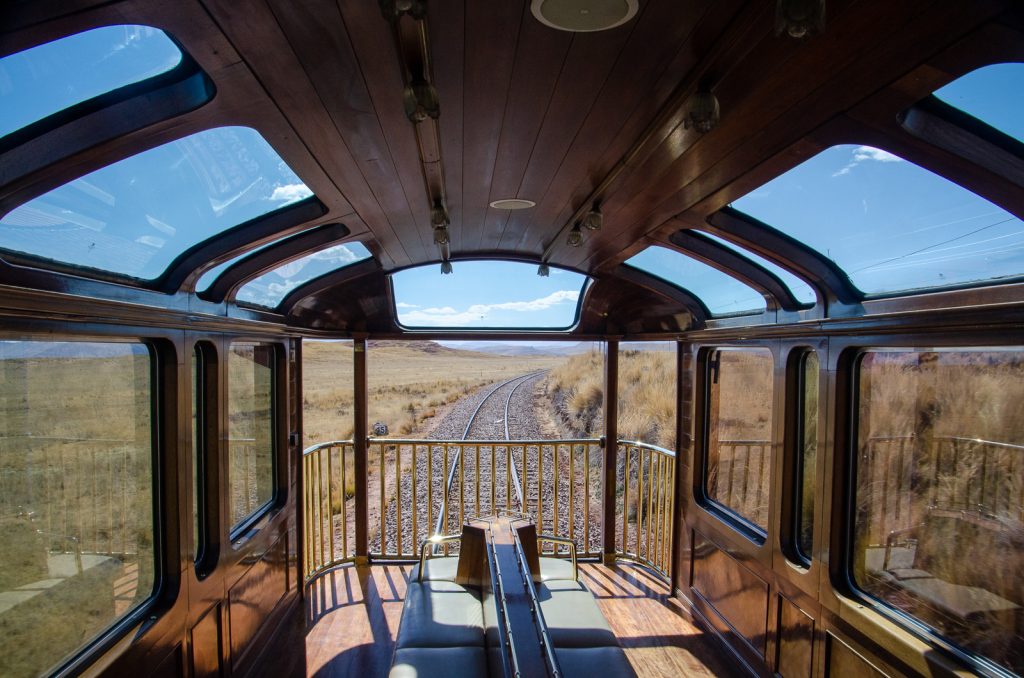
My journey across the Peruvian altiplano on the Titicaca train continued.
No trip to Peru, I was told, would be complete without experiencing the national dish of Cuy – Guinea Pig. Peruvians preemptively go to great lengths to assure people that the Cuy is NOT a rat. Deliberately misquoting Shakespeare, I venture to say ‘the Peruvians doth protest too much, methinks’.
Anyone who has ever eaten anything ‘exotic’ like dogs or snakes or human flesh, invariably says that it tastes ‘much like chicken’. Cuy is no exception to this rule. Served deep-fried, it does taste like chicken. Only it has a million tiny bones and next to no meat at all.
I had ordered Cuy in a Cusco restaurant and had much preferred it if they would have told me that it was a small, bony chicken. To remove the memory of the deep-fried rat I had just eaten, I ordered another national speciality: a Pisco Sour.
Now that was a different story; here was something I could put my name to. Having completed the first, I proceeded to down three of its siblings until the rat in my stomach was a pleasantly distant memory.
The rear carriage on the Titicaca Train is the bar and observation car. In the afternoon, it was announced that a drink-mixing demonstration would be given here and that they would teach us how to make a proper Pisco Sour.
Thinking that this was something I might want to learn to later be able to show off at a party, I made my way to the rear of the train.
Here I learned that a Pisco Sour consists of:
44 ml (1 1/2 oz) Pisco (Peruvian liquor)
1 Egg white (!)
30 ml (1 oz) Lemon Juice
20 ml (3/4 oz) Simple syrup
As I comprehended ingredient number three, I momentarily experienced tunnel vision. Not only had I eaten deep-fried rat, but I had also washed it down with no less than three raw eggs.
It was good, then, that this carriage doubled as an observation deck where it was possible to get some fresh air.
This is the view I enjoyed while I reevaluated my life-choices over the three previous days.
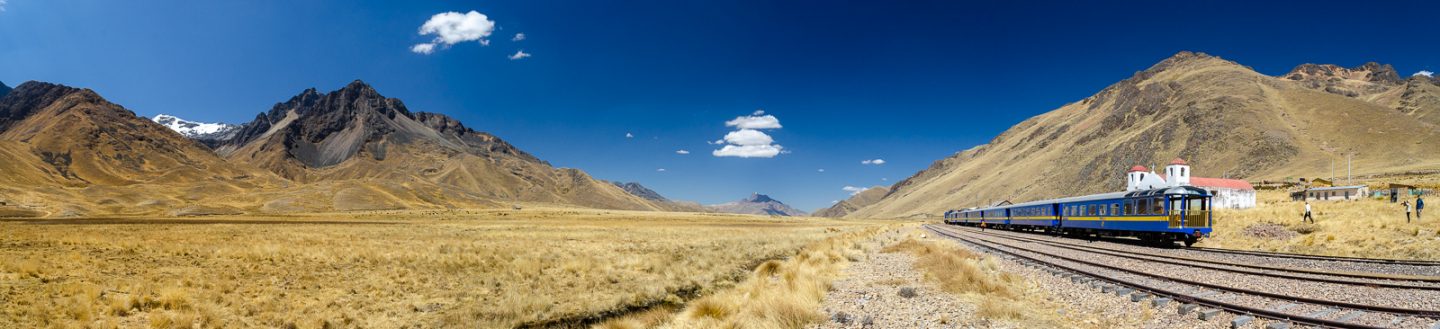
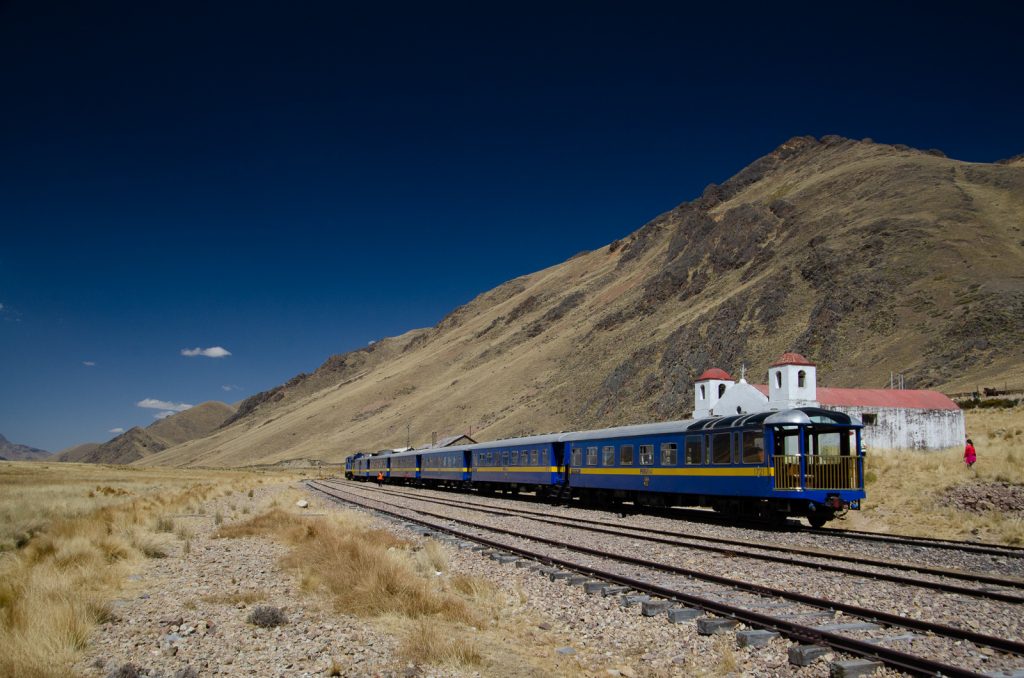
About midway between Cusco and Puno, the Titicaca train makes a stop at La Raya, the highest point on the route at 4 313 m.a.s.l.
The scenery was beautiful. It was now as Peruvian as scenery could be. It was Peru, as it is sold by travel magazines. The conifers from the lower altitudes had given way to an open, treeless moor bordered by high mountains on either side.
The train stop consisted of a small, open-air market where low-quality things could be had at high-quality prices. Next to the market stood a small, white chapel with a red tile roof. In front of it all, the blue and yellow train-carriages extended into the distance. It was irresistibly photogenic. I just needed to get a bit further away to frame it.
My fellow passengers believed in souvenirs over photos. If you returned from a journey without souvenirs, who could say where you had been? Souvenirs were reliable evidence. That much of the ‘evidence’ was manufactured in the People’s Republic of China did not matter.
What little energy I consumed this day, I spent when I heard the whistle indicating the imminent departure of my train. I was at this time about half a kilometre away, busy with my tripod and lenses.
Having been deprived of shopping for most of the day, the other passengers were much refreshed by the souvenir-shopping-therapy. Heavily laden but happy, they had returned to the train unbeknownst to me.
A mixed cocktail of unwelcome questions ran through my mind as I tried to assemble my gear and scramble to catch the train:
As it happened, none of the questions needed to be answered. I was, however, the last passenger to board.
Travelling by train up the valleys and across the high plain between Cusco and Puno is a slow business. It takes every minute out of ten and a half hours.
It is, however, designed to be a slow business. And to be enjoyed as such.
At the beginning of the journey, people were highly strung and excited about everything that passed by the train windows.
I could hear dirty laundry being described as authentic by my fellow passengers. Later the same adjective was being applied to a short, stout elderly lady having a coughing fit that was second only to the sound of the engine.
Ready with their cameras, tablets and phones, I would guess the passengers in my carriage alone created ~500 Gb of data in the first hour after departure.
While the magnificence of the landscape increased rather than subsided, we gradually became accustomed to the scenery. People laid the cameras aside, and the conversations became more mundane. Soon Sudoku magazines, books and tablets appeared.
While the engine worked its way along the valley, the landscape kept calling for more photos, but we had become deaf.
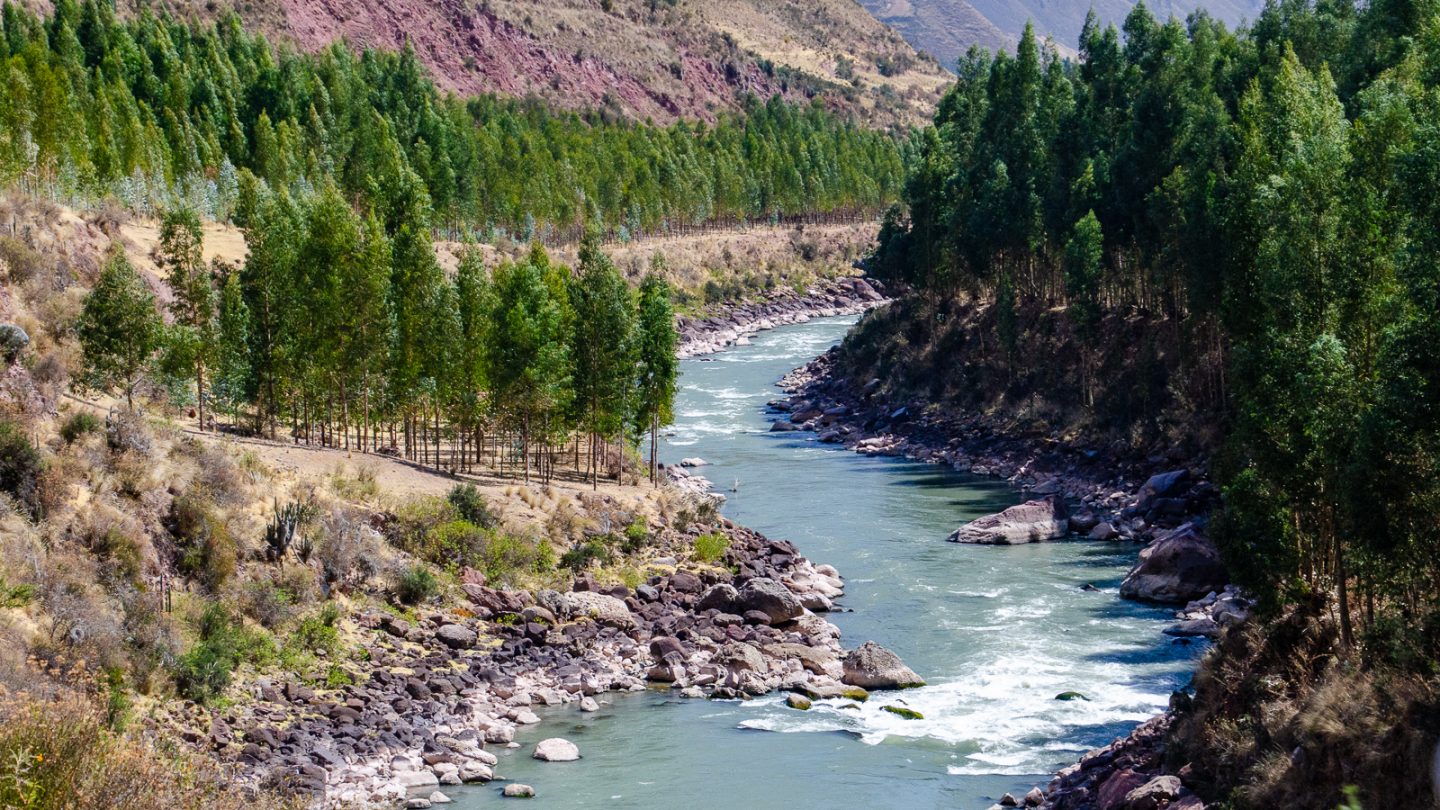
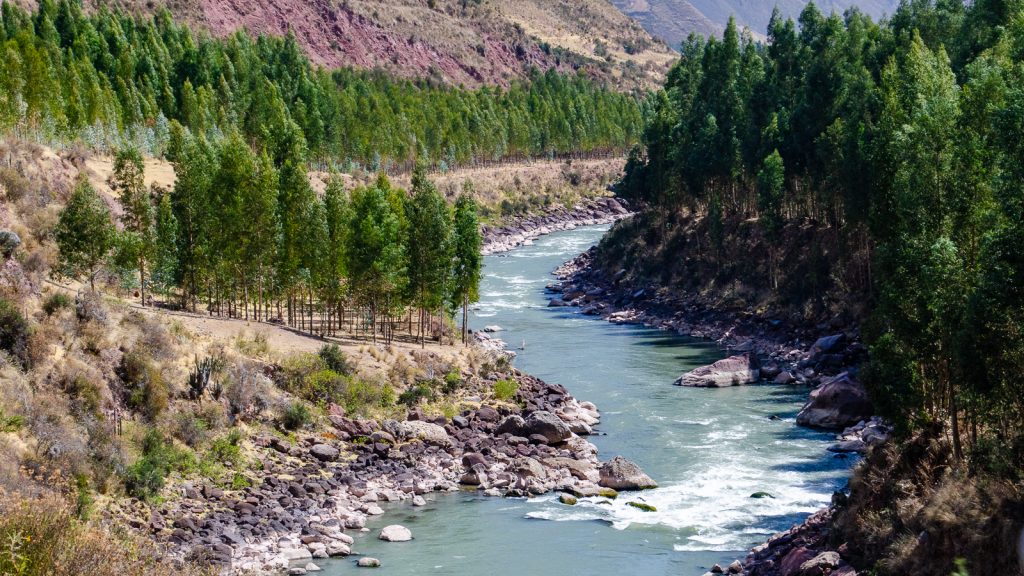
For a long time, the train followed the Urubamba River. This river had been my companion since I arrived in Ollantaytambo, but today our ways would part.
As it had done in the Sacred Valley, the Urubamba for me evoked images of Alaska rather than of Peru. But now, after having seen it, perhaps forever it shall be the other way around.
I sat and looked at the landscape that was rolling by for a long time. Then I, too, descended into my book.