Blog

  • My Problem with Camels

    My Problem with Camels

    Camels and I do not see eye to eye and have mutually agreed that it is for the best that we lead separate lives.

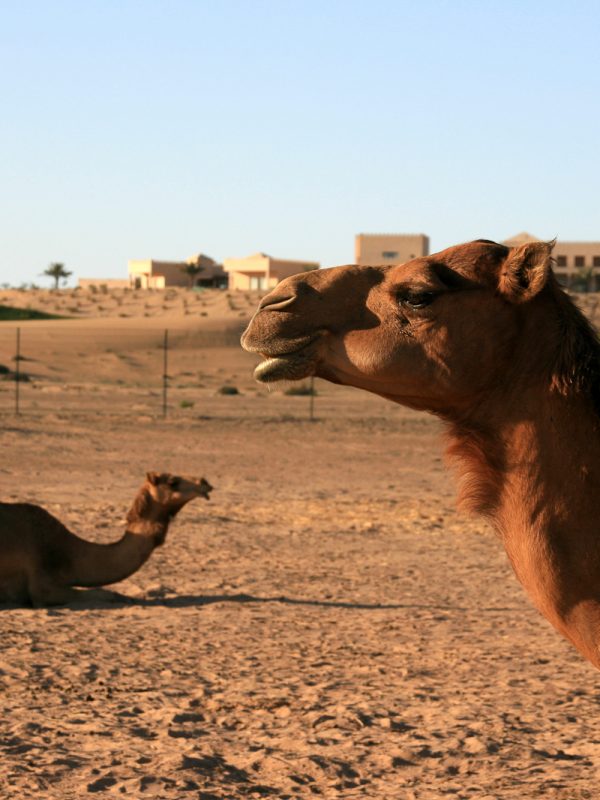
    Camel in the desert south of the Liwa Oasis

    The Arabian camel is a single-humped dromedary with a sharp, bony spine that it is exceptionally unpleasant to sit on. That accounts for my position on camels.

    As for why camels do not like me, I can only speculate. It might have to do with how the camels perceive the discrepancy between their own load-bearing capacity and how I look to them. Smart animals.

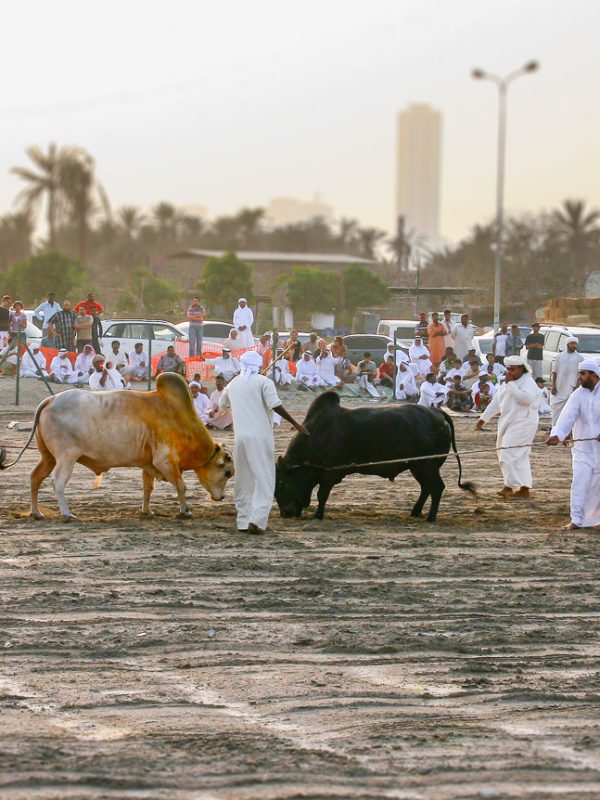
    Since the arrival of the hard-top road, the lorry, and the 4WD, the camel is no longer part of the Emirates’ transportation system. Still, the Emiratis, much to their credit, do not willingly abandon their heritage. Some 300 000 camels are kept, mostly for racing, a sport the Gulf Arabs revel in.

    As with horses, camel racing is all about retaining control without burdening the animal with too much weight. For this reason, the camel jockey of yesteryear was a good deal younger than one might care to remember.

    Luckily, the last twenty years have seen significant modernization to the sport. Since 2002, the age limit for camel jockeys in the Emirates was raised to 15 years. Nowadays, however, camels are increasingly jockeyed by robots.

    It is an odd meeting between high-tech and low-tech to see camel races with a robot jockey at the reins, remote-controlled by an overjoyed Emirati racing alongside the camel from the comfort of a car.

  • How an Oasis Looks for Real

    How an Oasis Looks for Real

    I knew how an Oasis looked.

    I knew because I had seen one in a Donald Duck comic when I was little. And, back then, I didn’t yet suspect the Disney corporation of wilfully distorting children’s minds.

    An oasis was a small pond of pure, immaculate water in the desert, surrounded by a small number of palm trees. In short, it should be like Huacachina in Peru.

    I was told by Emiratis and with pride, that Al-Ain was an oasis – and that Liwa was another.

    Upon my first visit to these places, I found the Disney-oasis conspicuous by its absence. But, there was something about the Arabic version of the oasis that was attractive nonetheless.

    In a worldview that transgresses the perimeter established by Disney, an oasis is an area where the groundwater table is high enough for plant roots to reach it—a place where cultivation is possible.

    The chief production of the oasis is the date. When I grew up in Norway, a date was a dark-brown lump of sticky matter that appeared in the house around Christmas. Nobody ate it, nor knew what precisely to do about it. It was the only sweetmeat to survive into January—and some times until next Christmas.

    To traditional life around the Arabian Gulf, the date was the very life-blood. Hence, the same way Norwegians grow more than 40 types of potatoes, the Arabs cultivate more than 200 varieties of dates.

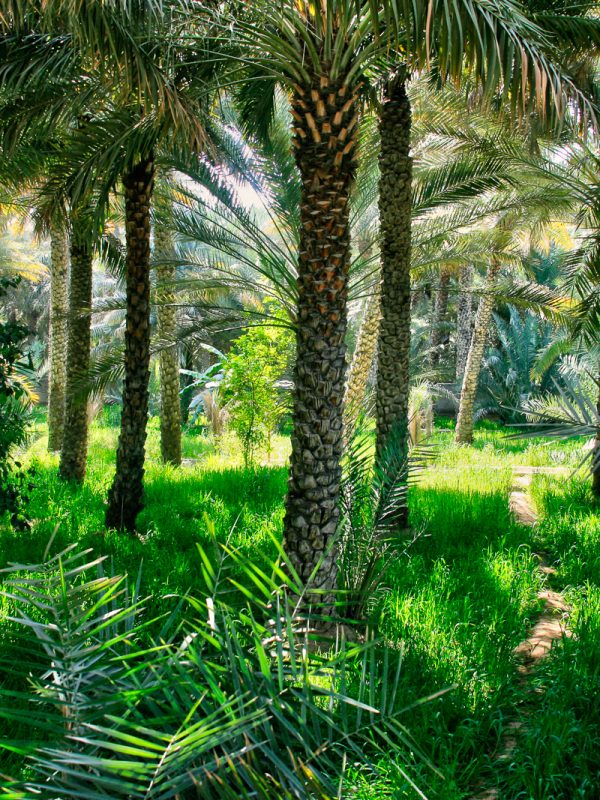
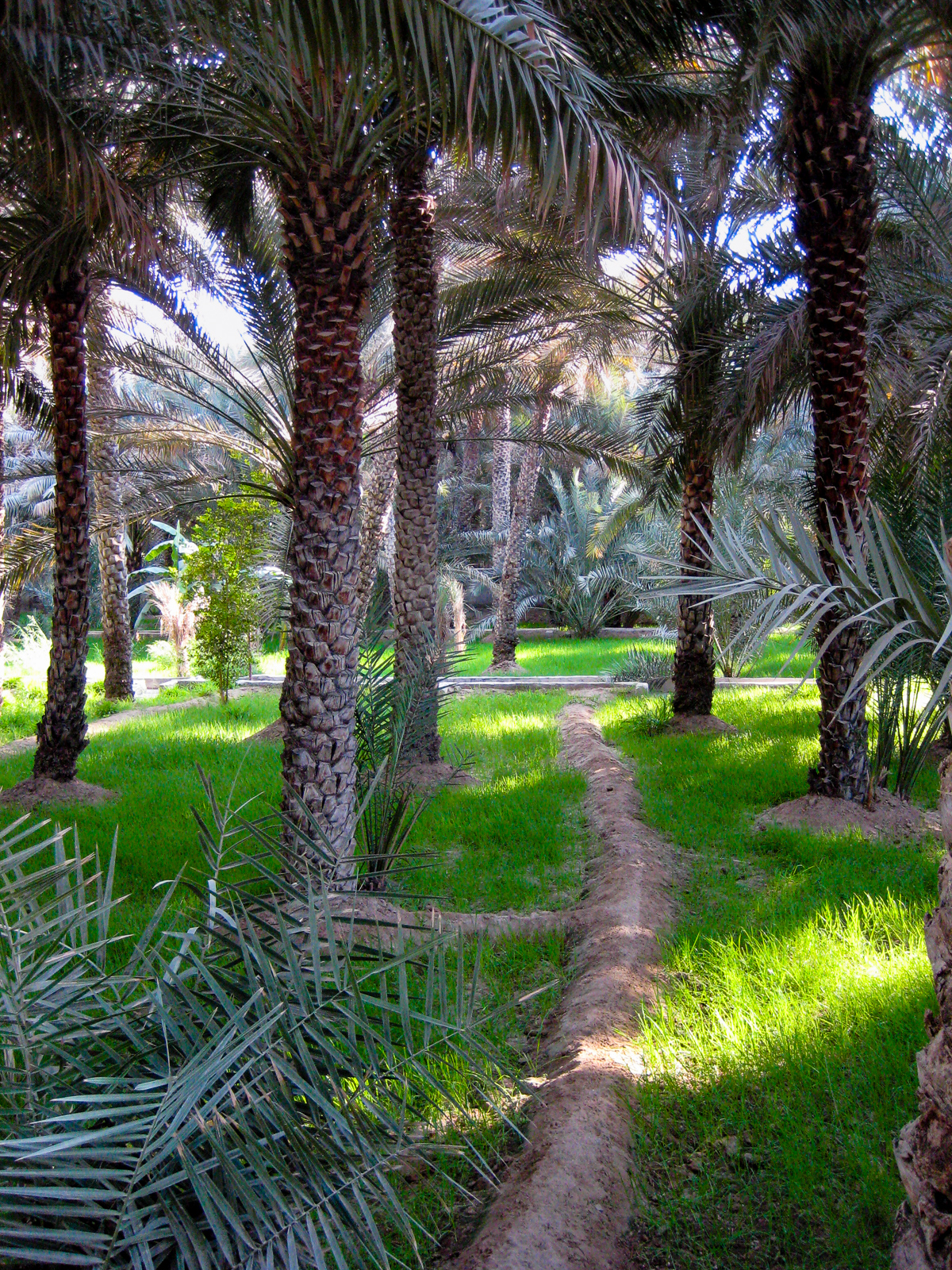
    In the central oasis of Al-Ain, it is possible to see how dates grow. The palm is held in high regard here, and great care is taken to allow the trees to grow unhindered.

    The water here is distributed from a few small springs via a network of tiny channels called ‘aflaj’. Using the ‘aflaj’ water can be directed to any of a multitude of small, intensively farmed agricultural parcels.

    Al-Ain is also the only place where I have seen that tourists and farmers are given preferential treatment over others.

    At the oasis’s main entrance gate, a sign reads: ‘No entry except for farm owners and tourists’.

    An unusual priority afforded for two minority groups that are generally shunned by society
  • The Mountains of the Emirates

    The Mountains of the Emirates

    The most impressive mountains in the Emirates can be found in the north and east.

    For a time, I had a colleague in Abu Dhabi, who was a self-professed outdoors’ man. I considered myself one, too, but had to concede that I played in the little leagues compared to this gentleman.

    Follow good path to bottom of scree slope, it said in our guide book

    My colleague, who for the purpose of this narrative shall be known as DK, was a man of keen intellect and great ability. However, DKs approach to nature consisted, in equal parts, of misery and suffering.

    In as much as that a certain amount of pain was a requisite qualification of nature experiences, we agreed. But, while I saw it as a means, for DK, it was an end.

    DK measured experiences in kilometres, more being better than fewer. The same applied to elevation scaled, summits reached, and the number of consecutive days sleeping on rocky surfaces.

    The only indicator where lower was better was the weight of his backpack. To that end, DK had taken, among others, the unprecedented step of shortening the handle of his toothbrush.

    Having combed the Emirates for promising hikes, we found one named the ‘Stairway to Heaven’ in the northern Emirate of Ras al Khaimah. This walk was both long, steep and strenuous, and thus instantly ticked off three of DK’s requirements.

    Peculiarly, this walk started in the UAE but ended in Oman. That made it necessary to return by the same route to avoid an uncomfortable run-in with the Royal Omani Police.

    As luck had it, though, the walk proved a good deal more complicated than we had anticipated, and the judiciary never became involved.

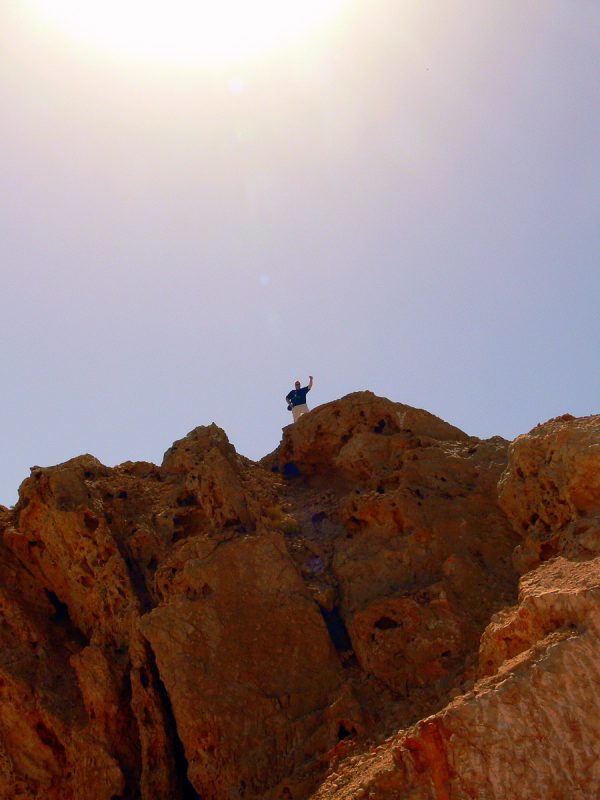
    Boulders the size of houses lay piled where our guide book assured us was a ‘good path’. Our regard for the Emirati goatherd of yesteryear skyrocketed as we slowly scrambled upwards.

    After three hours, we had not yet reached an exceptionally steep scree-slope that was described as the ‘real’ start of the walk. The only end within sight was that of our water rations.

    DK, for his part, held thirst to be an added bonus to any experience and was unmoved. But, reflecting on the bureaucracy that would follow from my demise on the mountain, he reluctantly agreed to strike a return.

    It had been a good day in the mountains.

  • The Empty Mountain

    The Empty Mountain

    The United Arab Emirates have mountains, too—not merely sand-dunes. These are mostly in the north and the east—but there is one in Abu Dhabi Emirate too.

    One.

    That ‘one’, is Jebel Hafeet—the ’empty’ mountain—located on the border between Oman and the United Arab Emirates near Al Ain.

    The sunset seen from Jebel Hafeet

    Jebel Hafeet, with its 1 249 m.a.s.l, towers majestically above the surrounding desert plain. It is unmistakably, undeniably and unanimously ‘a mountain’.

    In former days, an important hunting ground, the mountain has long had a vital role in the Emiratis’ hearts and minds. Today, Jebel Hafeet is more well-known for its recreational rather than its nutritional significance.

    And in this respect, Jebel Hafeet has issues; at least seen through Norwegian eyes.

    In Norway, the word ‘recreation’ has nothing to do with rest and restoration. Instead, it means an exorbitant outlay of physical effort with no other objective than reaching a viewpoint.

    This is so ingrained in our culture that we even have a ‘mountain code’ consisting of nine rules that states what would be blatantly obvious to anyone but Norwegians.

    The first seven rules focus on how to prepare for mountain walks.

    The eight’ rule states you shouldn’t be ‘… ashamed to turn around’, which you inherently ought to, having just failed to observe the first seven.

    The ninth’ and last rule advise you to ‘… conserve your energy and seek shelter’. That rule is widely regarded as encouragement to find a place to hide your shame while concocting means by which to blame your failure on a third party.

    Unwritten, and absolutely essential to Norwegians, is that a mountain must only be accessible at the cost of hard physical labour with no short-cuts or ‘illegal’ aids.

    It is in this last capacity that Jebel Hafeet fails to meet the requirements.

    There is a two-lane road, built to highway standards, leading all the way to the top. The upper slopes have a palace and a tourist hotel—and the summit is a vast parking lot with a snack bar.

    Still, smoking sheesha here at night, looking out over the lights of the oasis town of Al Ain is a decidedly good thing in life.

  • The Mighty Rivers of Arabia

    The Mighty Rivers of Arabia

    It is a curious feature of humanity that we tend to obsess over what we are missing rather than rejoice at what we have in plenty.

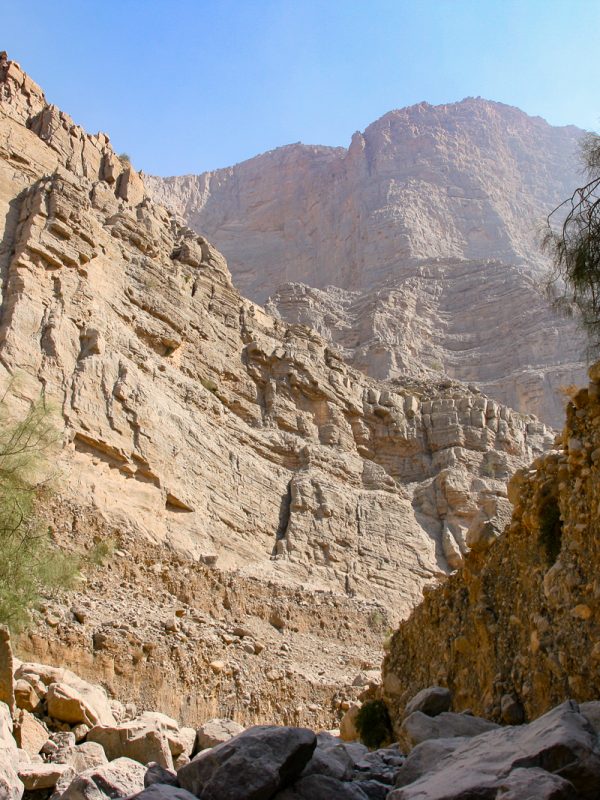
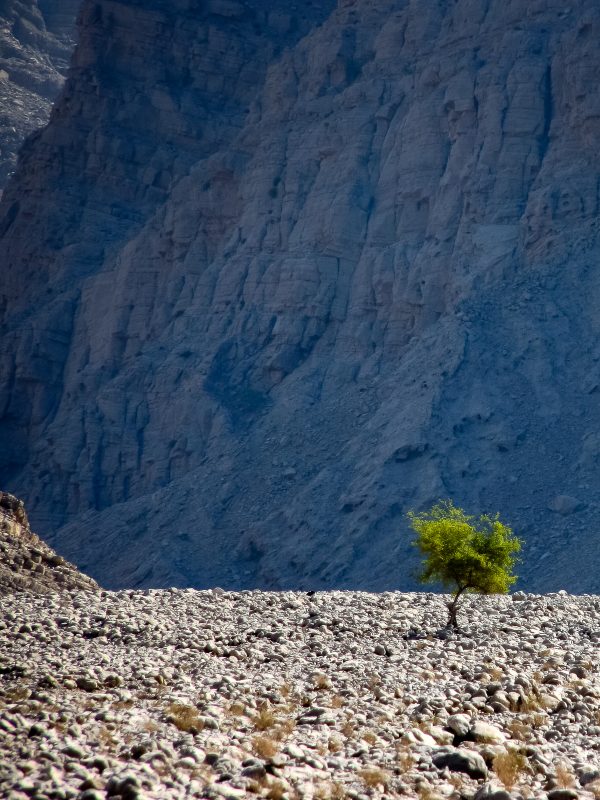
    A lonely tree fighting a battle that is all but lost against an invisible enemy in a presently dry wadi bed

    Norwegians are obsessed with heat, sunshine and warm water, concepts of which we have only fleeting knowledge. As a nation, we have convinced ourselves that there is such a thing as summer. Our capacity for self-deceit runs deep.

    The modern Emirati is subject to the same weakness as the Norwegian. But, feeling that his quota of sunshine and heat is abundantly satisfied, the Emirati instead is obsessed with his rivers—or more appropriately his lack thereof.

    Upon entering a government office in the Emirates, I was surprised to see a map almost entirely covered in blue stripes. Enquiring what these might be, I was told with great confidence and even greater indignation that these were ‘wadis’—seasonal rivers.

    It is conceivable that there existed someone who knew less of Arabic geography than me at the time. Still, it would have taken time and determination to find such an individual.

    As only the truly ignorant can, I revelled in my own incompetence. I roared with laughter at this wishful thinking on the part of the Emiratis. Rivers in Arabia—huh!

    But the wadi played a significant role in society. Curiously and wonderfully, wadis were prime destinations for picnics. And out of a sheer fascination with the unusual idea of seeking out a dry river bed and taking my lunch there, I gradually came to adopt the Emiratis appreciation.

    I privately kept making fun of the rivers, though. That is… until it rained.

    Now, rain is not an everyday incident in the Emirates. The first two or three times it occurred, it offered little to broaden my mind concerning the wadis. A few measly drops breached the fine coat of dust on my car, and that was it.

    In Norway, it could start to rain ANY day of the year, and continue uninterrupted for two weeks or more. The sort of rain that fell on the Emirates wouldn’t register by my measures.

    Or so I thought until it really rained.

    In mere hours, then, the wadis on which I had heaped so much scorn, turned into mighty rivers as advertised.

    Lesson learned

  • Cities Growing out of Deserts

    Cities Growing out of Deserts

    While it is always nature that fascinates me, it would be wrong to forego the cities when talking about the United Arab Emirates.

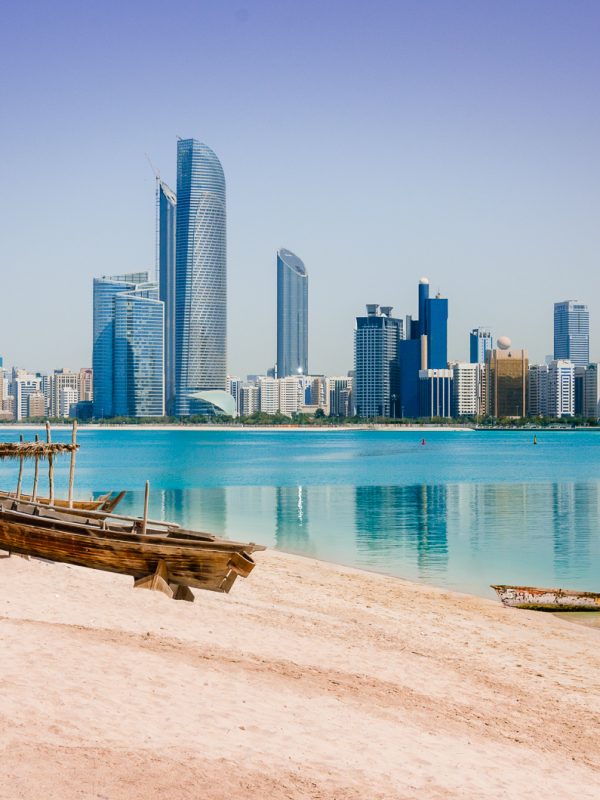
    The Emiratis are proud of their cities and with good reason. The impressive cityscape in this photo simply wasn’t there fifty years before. Abu Dhabi was nought but a sandbank with a few one-storey buildings well into the 1970s.

    During my time in the Emirates, it was not uncommon to hear ex-pats self-righteously complain that ‘things were slow’ in the Emirates. However, I’d like to see a city anywhere in the world built with the determination and speed matching those lining the Arabian Gulf.

    During the same fifty years, European cities like London, Paris or Rome indeed sprawled. The odd tower popped up here and there—but in no way, shape or form can the change be said to be the equal of the transformation taking place in the Emirates.

    It is also necessary to consider that whereas the old-world cities had hundreds of years of accumulated urban development experience, the Emirates began with no such advantage.

    On the contrary, they had suffered a hard existence, lived from hand-to-mouth, were part nomadic, and must endure life in extreme heat and humidity. Conditions were so severe that the moisturiser wielding and air-conditioned white-collar worker of today would perish without ceremony or delay were he to endeavour the half of it.

    No, the Emiratis of the mid-20th century were singularly tough and capable people.

    Cities like Abu Dhabi do not just ‘happen’. Of course, something must be attributed to good fortune:

    First, they discovered oil, and with oil, wealth.

    Second, they had installed an unusually adept leader, the late Sheikh Zayed bin Sultan Al Nahyan, a man of vision, capability and political genius.

    But leaders and wealth alone are not enough to generate sustainable value. Thus, a significant portion of the credit for ‘the Emirates’ we see today must go to the Emiratis themselves.

    During many years and countless cups of coffee enjoyed in the company of this country’s men and women, I have had a prize-winning number of preconceptions shattered—to my significant advantage.

  • The Eco-Questionable Delights of Dune Bashing

    The Eco-Questionable Delights of Dune Bashing

    When I arrived in the Emirates, I saw the giant desert dunes as surrogates for my beloved Norwegian mountains and was happy. Here I could walk to my heart’s content and enjoy the silence and tranquillity unique to the desert.

    The Emiratis were also happy about their dunes, but for a different reason; one that had little to do with tranquillity.

    Most Emiratis are what one might call regular, highly likeable people leading ordinary lives, far removed from the Oil Sheikh stereotype. But ‘most’ is not ‘all’, and the reputation of the Gulf Arab has not been conjured out of thin air.

    The density of young males, ostensibly unburdened by fiscal woes, is high. The poorer among these will by default have a Rolex Submariner shining from their wrist—the more well-to-do something more respectable, such as an Audemars Piguet or a Patek Philippe.

    Additionally, wealth is expressed through cars. The well-to-do Emirati likes their sports cars, and as with the timepieces, those of middling resources typically settle for some flavour of Porsche. Proper wealth, however, is more appropriately expressed through a Bugatti, a Maybach or a Koenigsegg of an unapologetic colour.

    But the Emirati has a utilitarian streak to him and likes to keep an offroad vehicle, too. Unlike the European SUV-owner, who drives his car as if it was made of fine crystal, the Emirati has no need for paved surfaces.

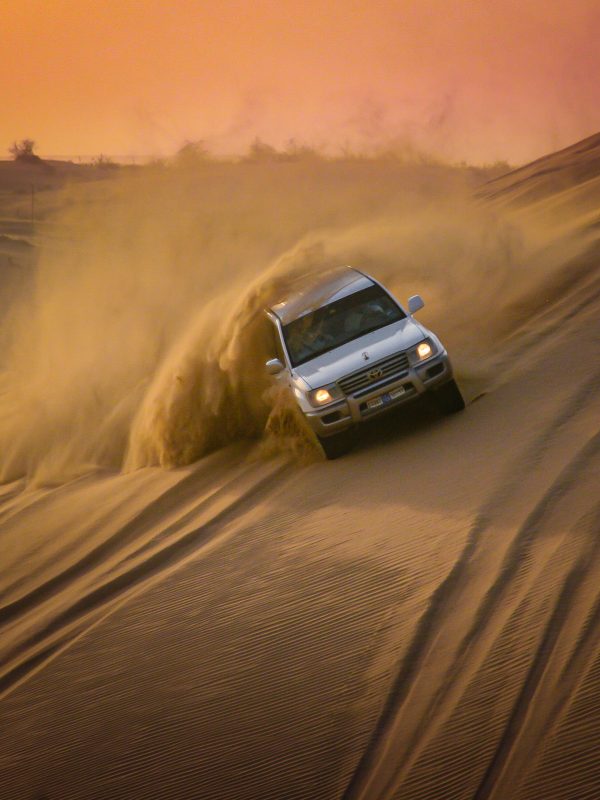
    ‘Dune bashing’ is to Emiratis what skiing is to Norwegians; to those unfamiliar with the expression ‘dune bashing’, it is descriptive of a wide range of irresponsible driving malpractices in the desert.

    Dune bashing is not for the faint of heart or those who respect their car insurance terms

    At first, this was unusual to me. Still, after a time, I concluded that it would be wrong to dismiss this form of recreation purely based on its verifiable insanity.

    Instead, I joined the Emiratis in their regard for sand driving and their disregard for their insurance companies.

  • The Dunes of the Rub’ al Khali

    The Dunes of the Rub’ al Khali

    Winter, unless it comes with plenty of snow and cold, crisp, sunny days with blue skies, isn’t useful for much.

    The worst type of winter is the one that offers near-perpetual downpour, grey skies, short days and around-zero temperatures. That, incidentally, is the type of winter we have in Belgium – and indeed in most of the northern part of continental Europe.

    Now, spring is never quite as far away here as it is back home in Norway. Still, the next two months will offer plenty of time and opportunity to reflect on the Belgian winter relative to that of other places; places that this winter will remain out of bounds.

    I lived in Arabia for some years. There, I learned of another winter; a winter of pleasant temperatures, clear skies, perpetual sun, deserted beaches and indoor ski slopes.

    So, as I ushered out 2020 by paying tribute to the nature of Belgium, I will work myself through the Belgian winter by reminiscing over warmer, sunnier days on the Arabian peninsula.

    Initially, it had been my intention to spend only four weeks working in the United Arab Emirates. But, as time passed, one project turned into another and another until at the end of four years I was still there.

    It was the nature that fascinated me the most about the Emirates. And, when talking about nature in Arabia, the mind quickly turns to the desert.

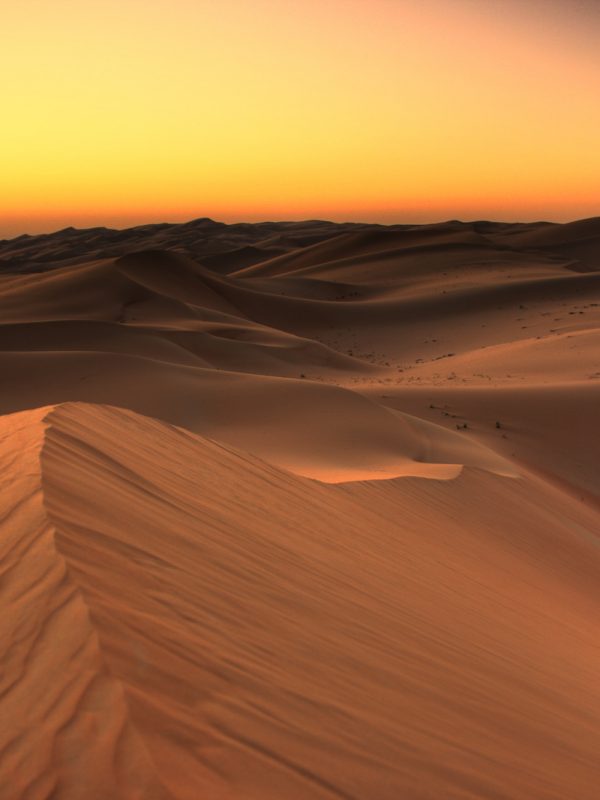
    Sunrise over the sand dunes of the Rub’ al Khali south of Abu Dhabi’s Liwa Oasis

    Desert is not the only type of nature in the Emirates, as I shall proceed to demonstrate over the next days and weeks—but admittedly the most prominent.

    For that reason, I will start in the desert, with a sunrise view from the top of one of the vast sand dunes that mark the start of the Rub’ al Khali—the Empty Quarter—of the great Arabian Desert.

    The sand dunes here are two-three hundred meters tall, creating an ever-shifting mountain landscape of red, orange, yellow, brown and grey sand that is set on fire by the sunrise and the sunset.

    So, right now, while the rain is drizzling down on the Belgian winter dawn, join me here, albeit, for the moment, figuratively rather than literally.

  • Seeing out 2020 in Belgium

    Seeing out 2020 in Belgium

    ❤🇧🇪 It may not be an Iguaçu, a Victoria or a Murchison, but the Belgian waterfall is alive and well. And, in a country with virtually no elevation difference, the very existence of waterfalls is something to be taken note of.

    To be sure, these are not for those who measure waterfalls by cubic metres per second or height of the drop. But for people, like me, who long for the soothing view—and sound—of a gentle stream making its way down a hill, Belgium has just the cure.

    The ‘greatest’ waterfalls in Belgium, the Cascade du Bayehon, lies on the southern slope of the East Belgian highland, near the village of Longfaye.

    Cascade de Bayehon, Longfaye, East-Belgium

    The Internet states that this waterfall has a drop of nine meters. If that is true, my six-year-old son is nearly three meters tall. That would surprise me, but who am I to say.

    In any case, let me not fret about technicalities. It is a waterfall; a unique, adequately sized and impeccably shaped waterfall.

    Second to, below—nor indeed above—any other waterfall.

    This photo concludes my end-of-the-year photo-tribute to Belgium. I have found places here that soothes all my longing for Norwegian nature, and much else besides that is unique to Belgium.

    The eight places I’ve chosen to share, have in some way, shape or form lifted my spirits this year. Through the many interactions I have enjoyed with you, I have learned of more places; places that are sure to contribute to the beauty of life in Belgium in years to come.

    From incoming Christmas and New Year greetings, I notice that many are happy to see the end of 2020. I, too, am glad to cast off this year’s shackles, but not to throw out the good with the evil.

    This year’s extraordinary circumstances gave me the ‘push’ I needed to explore attractions closer to home, and I have found these to be many and bountiful. My eyes have been opened to a wealth of beauty, formerly hidden from me by my ignorance, and for that, I shall be eternally grateful.

    So, goodbye, 2020, I shall remember you. Hello, 2021, I hope you bring good things with you.

    Scenes to remember Belgium in 2020 by as 2021 stands on the doorstep
  • The polarized views on the Belgian Coast

    The polarized views on the Belgian Coast

    My first meeting with the Belgian coast was the Zwin.

    Many years ago, I was bicycling from the Netherlands, and after a long succession of dikes, polders and sea-walls, the broad tidal marsh of the Zwin announced that I had, at last, entered Belgium.

    Save grumblings about its unfortunate proximity to Knokke; I have not yet come across anybody who has anything negative to say about the Zwin.

    The Belgians seem to hold distinctly polarized views on Knokke-Heist, though.

    Some close their eyes and reminiscence over Champagne, oysters and foie-gras; others put their fingers in their mouths, indicating that they’d sooner be found dead in a ditch, covered in their own vomit, than being seen out and about in Knokke.

    The same people tend to hold opposing views on the rest of the Belgian riviera, too. The exceptions to this rule are De Panne that neither faction seems to mind, and Ostende, for which both parties reserve a good deal of colourful, if not wholly positive adjectives.

    To me, ALL the cities on the Belgian coast are, eh, how can I put it charitably? Yes, I’ve got it: places that show an exquisite and unparalleled potential for aesthetic improvement.

    I observe that the proliferation of art galleries and official Rolex vendors is greater in Knokke than in, say, Ostende. But, once I find myself ‘parked in’, it matters little to me whether it is by a self-entitled Porsche or an apologetic-looking Fiat; I’m still stuck.

    In this matter, my Belgian friends are divided.

    But my mission, this week, is not to point out the petty foibles of the Belgians. Instead, I wish to celebrate the virtues of the Belgian coast.

    And, what is excellent about the Belgian coast is the Belgians and their beach huts.

    These huts may be second nature to Belgians; to a Norwegian, however, the rituals connected with these sheds are as exotic to behold as the wildebeest migration in the Serengeti.

    The last light of the day hitting the dunes near the Zwin

    Well into his sunset years, the Belgian can be found on his own, in front of his beach hut, spade in hand, digging away to his heart’s content for no apparent reason whatsoever.

    All things considered, what could be greater than that?